
Description
Introduction – High-Performance Titanium Alloy Rotor Sleeve
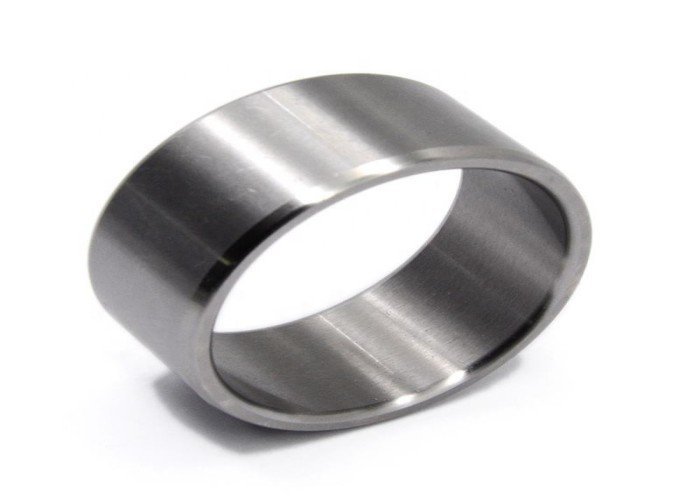
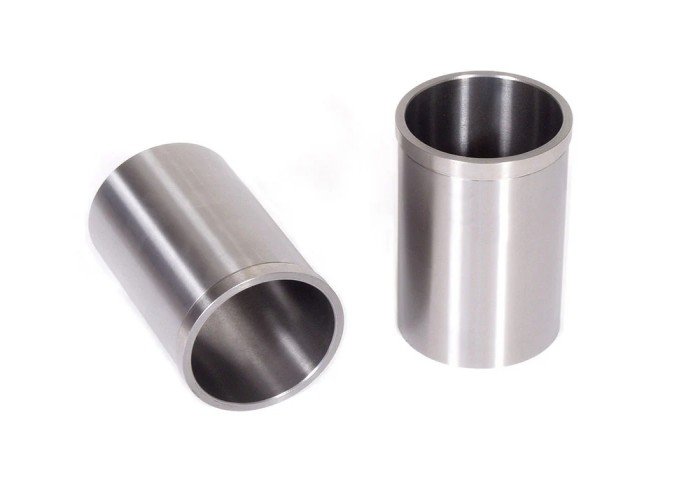
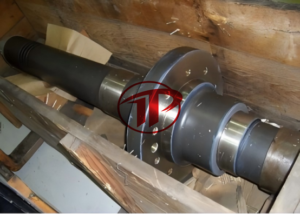
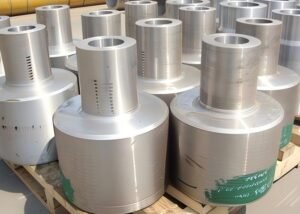
The Titanium Alloy Rotor Sleeve is one of the main load-bearing parts of the rotor structure utilized in high-speed as well as ultra-high-speed rotating machines, especially in electric motors and generators. This component mainly serves to confine the rotor mechanically, keep the rest of the internal components safe, and also facilitate the heat dissipation when operating under high rotational stress.
We are a professional supplier of titanium alloy materials, including titanium alloy forgings, titanium alloy precision machining parts, and titanium alloy standard parts. By extending advanced metallurgy and processing capability, we are able to offer high strength titanium alloy materials with the best strength-to-weight ratio, lower density, or higher cost efficiency. Working with us is working with a team of professionals comprising experienced engineers, skilled production staff, and readily available after-sales service.
Composition and Design of Titanium Alloy Rotor Sleeves
Titanium alloys, owing to their very high specific strength, good fatigue resistance, and excellent corrosion resistance, are nowadays considered as the best materials for high-end rotor sleeves that are subjected to harsh operation conditions.
Typical Titanium Alloy and Nickel-Based Alloy Grades
Titanium and titanium alloys
TA1, TA2, TC4 / GR5, TC11, TA9 / GR7, TA10 / GR12, TA15, TA18 / GR9, TC18, TC20, TC21
Nickel-based alloys (for special conditions)
GH4169, Inconel 718
These titanium metal alloy grades meet a comprehensive spectrum of performance criteria, ranging from corrosion resistance and weldability to ultra-high strength and thermal stability capabilities.
Production Standards for Titanium Alloy Materials
Each titanium alloy rotor sleeve is produced following internationally and locally approved standards:
Titanium and titanium alloys
GB/T 2965-2007, GB/T 13810, Q/BS 5331-91, GB 2218A-2008
ASTM B348, ASTM F136, AMS 4928, MIL-T-9047
Nickel-based alloys
GB/T 14992 / ASTM B637
AMS 5662 / 5663 / 5664
ISO 5832-9 / ASTM B443 / B444
These standards serve as a guarantee to maintain the quality of the material, accuracy of the dimensions, and the traceability of the products.
Production Process of Titanium Alloy Rotor Sleeves
Titanium alloy rotor sleeves are precision thin-walled components that require strict process control throughout manufacturing. The typical production flow includes:
Blank Preparation and Forming
High-quality titanium alloy bars or forgings are selected as raw material to ensure uniform internal structure.
Precision Machining
Multi-step machining processes such as rough turning and finish turning are applied. This stage is critical for achieving tight dimensional tolerances and concentricity.
Heat Treatment
Prior to final machining, stress relief annealing and hydrogen removal annealing are conducted to stabilize the microstructure and prevent hydrogen embrittlement.
Quality Inspection and Surface Treatment
Ultrasonic testing (UT) is used to detect internal defects, followed by dimensional inspection of all critical features.
Note: Magnetic particle testing is not applicable to titanium alloys and is therefore excluded.
Surface finishing processes such as precision turning and chamfering are applied according to customer requirements.
Before shipment, a complete set of inspection and traceability documents is provided, and products are delivered only after quality approval.
V.Application Fields of Titanium Alloy Rotor Sleeves
Rotors made of titanium alloy sleeves find their main use in cases where the demand for durability under extreme conditions, ultra-high rotational speed, and high reliability of the operation is very high. Considering the feedback from users and the adoption of practices by different sectors, the applications of these sleeves are mainly in:
High-speed and ultra-high-speed motors: electric spindles, air compressors, flywheel energy storage systems
Special motors and generators: nuclear main pump canned motors, aerospace generators, high-speed turbine generators
Low-temperature and special-environment equipment: cryogenic pump permanent magnet motors
High-reliability industrial equipment: motors and pumps for oil & gas, chemical, and energy industries
In all these situations, the titanium alloy rotor sleeves that are made of high-strength materials give an uncompromising solution for the combination of mechanical integrity and the need to reduce the weight.
Advantages of Titanium Alloy Rotor Sleeves Compared with Carbon Fiber Composites
Titanium alloy materials, when compared to carbon fiber composite sleeves, have several distinct advantages:
Higher comprehensive mechanical props and among them, the isotropic strength and the predictable fatigue behavior are very remarkable
Well-developed and reliable technology to make the products, adaptable for mass production and strict quality control
Increased operational reliability, particularly when dealing with thermal cycling and long-term rotational loads
Good electrical and thermal conductivity, which is very useful for motor heat dissipation
Lower overall cost and easier maintenance for many industrial applications
Therefore, the industries that are in the domain of manufacturing titanium alloy rotor sleeves are focused on producing high-speed motors and generators where the combination of safety, durability, and lifecycle cost is a very crucial factor.


Reviews
There are no reviews yet.