
Description
Product Overview
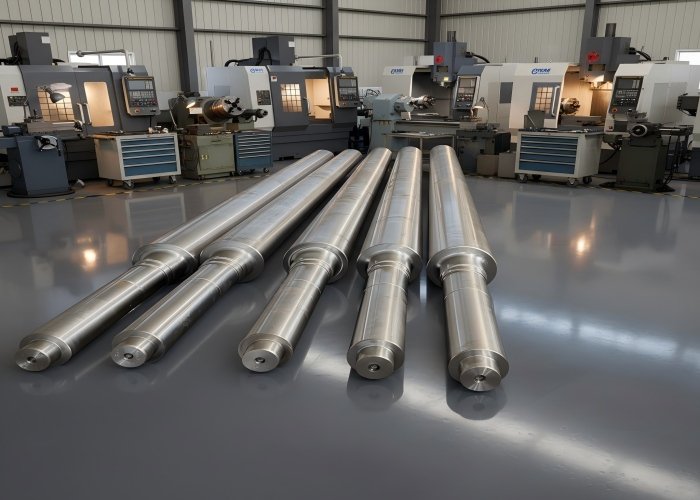
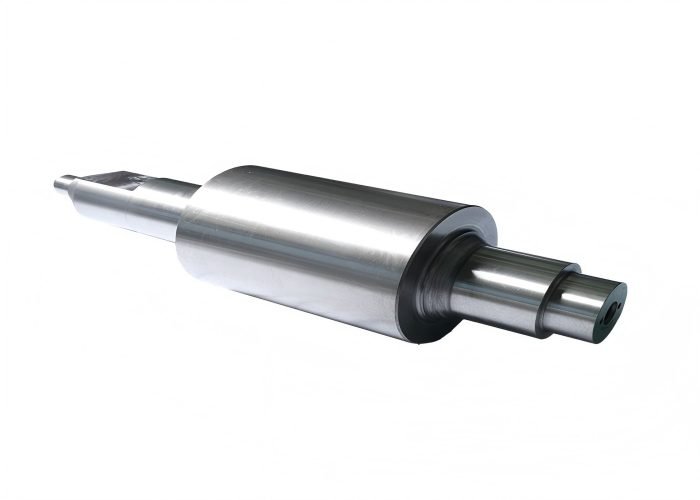
TIPTOP Forging focuses on supplying reliable main shaft forgings for industries such as mechanical equipment, wind power, mining, metallurgy, and shipbuilding.
Main shaft forgings are often considered the “core support” of rotating equipment. They are responsible for transmitting torque and bearing heavy loads during operation. Because of this, both material quality and forging process play an important role in long-term performance.
Our main shaft forgings are produced from high-quality steel ingots or billets, using open die forging or die forging depending on the structure and size requirements.
Available Materials for Main Shaft Forging
TIPTOP has flexible sourcing channels and practical experience with different material standards. Production can be carried out based on international standards or customer-specified compositions.
Common materials include:
Carbon Steel
35#, 45#, Q235, Q355D, A105
Alloy Structural Steel
40Cr, 35CrMo, 42CrMo, 40CrNiMo, 20CrMnTi, 35CrMoV, 34CrNiMo6, 18CrNiMo7-6
Stainless Steel
2Cr13, 3Cr13, 304/L, 316/L, F51 duplex stainless steel
ASTM Grades
4130, 4140, 4340, 4317
Material selection can be adjusted based on load conditions, working environment, and service life requirements.
Product Types of Forged Shafts
According to different structures and application needs, main shaft forgings can be produced in various forms:
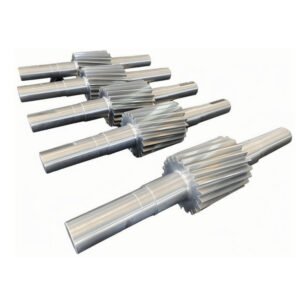
Smooth shafts
Stepped shafts
Splined shafts
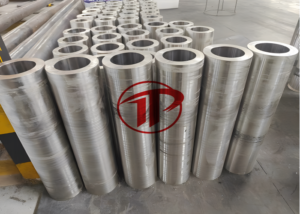
Hollow shafts
Special-shaped shafts (such as crankshafts and eccentric shafts)
Most products are manufactured according to customer drawings to ensure compatibility with equipment design.
Main Applications
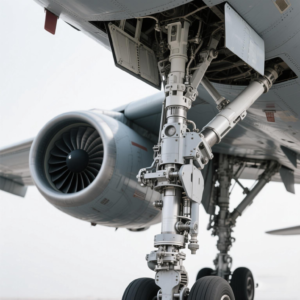
Main shaft forgings are widely used in industries where high load and continuous operation are required.
Wind Power Generation
Used as key rotating components, these shafts must handle variable loads and long-term fatigue under changing wind conditions.
Mining and Metallurgy
Applied in heavy equipment such as crushers, mills, and rolling mills (including hot and cold rolling systems).
Shipbuilding
Used as intermediate shafts, thrust shafts, stern shafts, and rudder stocks, transmitting engine power and supporting propulsion systems.
Petrochemical Industry
Used in reciprocating compressors, pump units, and other pressure-driven equipment.
General Machinery
Including gearboxes, machine tool spindles, steam turbine rotors, and hydro-generator shafts.
Our Manufacturing Capability
TIPTOP provides a relatively complete production process for main shaft forgings, including:
Raw material preparation
Heating and forging
Heat treatment
Rough machining and finish machining
This integrated process helps reduce intermediate steps and improves production efficiency.
Quality Control
Quality control is carried out throughout the production process.
From raw material inspection to final testing, each step is checked to ensure the shaft meets required standards.
Typical inspection includes:
Chemical composition analysis
Non-destructive testing (such as ultrasonic testing)
Mechanical property testing after heat treatment
Inspection standards can follow ASTM, DIN, ISO, or customer requirements.
Our Advantages
Integrated Production
From forging to machining, the process is handled in-house, which helps reduce lead time and coordination costs.
Stable Quality Control
Each step, including material inspection and heat treatment, is controlled to ensure consistent product performance.
Custom Manufacturing
Production is based on customer drawings. Both structure and material can be adjusted according to actual working conditions.
Practical Technical Support
Our team focuses on process feasibility and production experience, helping ensure that the product can be manufactured reliably and used in real working conditions.
Supply and Delivery
We can supply main shaft forgings in different delivery conditions, such as:
Forged condition
Heat-treated condition
Rough or finish machined condition
Final delivery depends on customer requirements and subsequent processing plans.

Reviews
There are no reviews yet.