
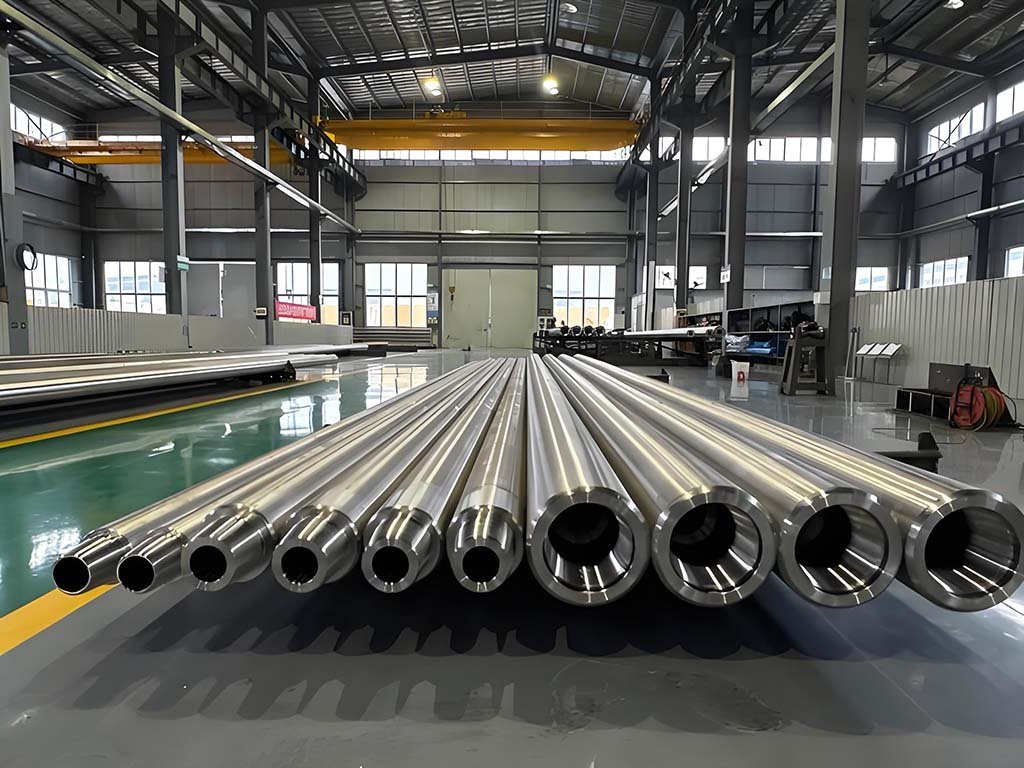
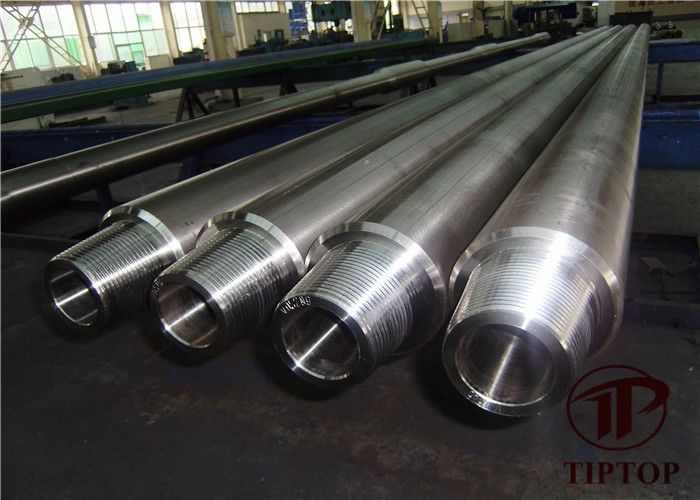
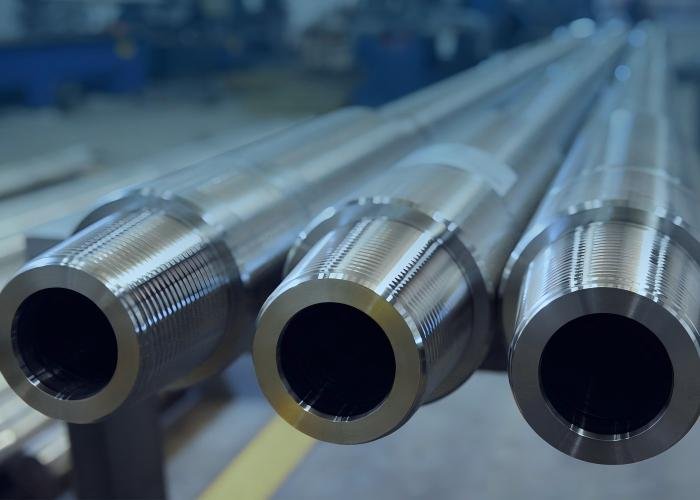
Description
I. Brief introduction to P550 non-magnetic bars
Non-magnetic steel, also known as non-magnetic iron or low-magnetic steel, refers to a special type of alloy steel that generates almost no magnetic induction intensity in an external magnetic field. In engineering, a relative permeability μ ≤ 1.01 is used as the defining standard – when the μ value is ≤ 1.01, the material’s magnetic property is extremely weak and can be regarded as “non-magnetic”. In contrast, the permeability of ordinary carbon steel is usually between 200 and 500, while the permeability of non-magnetic steel is close to the vacuum permeability (μ = 1), thus effectively avoiding magnetic interference in high-precision and strong magnetic field environments.
TIPTOP has been providing non-magnetic bars to manufacturers and traders from around the world for many consecutive years. In addition to P550, we can also offer non-magnetic bars in other materials such as P530 and P650.
II. Typical mechanical property values of P550 non‑magnetic bars
Tensile strength Rm ≥ 1035 MPa
Yield strength Rp0.2 ≥ 965 MPa
Elongation A% ≥ 20%
Reduction of area Z ≥ 50%
Impact energy Akv ≥ 80 J
Hardness HB ≥ 290
III. Advantages of P550 as non‑magnetic bars
1.The tensile strength in the cold‑worked condition can reach over 1000 MPa, meeting the long‑term service requirements of downhole tools under complex stress conditions.
2.Even in the high‑hardness state, the impact energy remains above 80 J, and the reduction of area is ≥ 50%, providing high resistance to brittle fracture under downhole impact loading conditions.
3.The high‑Cr + high‑Mo + high‑N composition system endows excellent resistance to pitting corrosion, intergranular corrosion, and stress corrosion cracking, performing stably in sour gas (H₂S/CO₂) environments. In a 5% NaCl salt spray test, the corrosion resistance grade reaches 9, with a pitting potential ≥ 1.2 V.
4.It can operate stably in the range from -196℃ to 800℃, with a high‑temperature oxidation resistance up to 950℃, adapting to alternating conditions of extremely cold regions and high‑temperature deep wells.
5.Surface hardness (can reach > HRC 50) and wear resistance can be further improved through surface treatment processes such as gas soft nitriding, significantly extending the service life of downhole tools.
IV.Applications of P550 as bars, especially in the oil drilling field – what products is it often machined into?
Oil drill collars and downhole tools: During drilling, non‑magnetic steel drill collars avoid magnetic interference with electronic instruments such as measurement‑while‑drilling (MWD) and logging‑while‑drilling (LWD), ensuring accuracy in borehole trajectory control.
Precision molds and electronic equipment: Used to manufacture non‑magnetic molds, shielding cases, and sensor housings to prevent magnetic components from attracting iron filings or affecting precision electronic components.
Medical imaging equipment: Structural parts and fixing fixtures for MRI (magnetic resonance imaging) equipment require non‑magnetic steel to avoid safety hazards or image artifacts in strong magnetic fields.
Aerospace and military: Navigation systems, inertial platforms, electromagnetic railgun rails, and other core components sensitive to magnetism.
V. Main production process of P550 non‑magnetic bars
Steelmaking (melting): Primary melting in an electric arc furnace (EAF), followed by precise composition control using argon‑oxygen decarburization (AOD) or ladle furnace (LF) refining, then electroslag remelting (ESR) refining. If special requirements exist, vacuum arc remelting (VAR) may be applied to ensure uniform nitrogen distribution and ultra‑low impurity content.
Hot working (forging/rolling): The ingot is hot‑rolled or forged at 1050–1150℃ with a forging ratio ≥ 3:1 to eliminate cast structure segregation and refine grains, gradually obtaining the required outer diameter of bar or hollow bar.
Solution treatment: Typically solution treated at 1020–1120℃, water‑quenched or oil‑quenched, to dissolve precipitates, homogenize the structure, and fix nitrogen. For non‑magnetic drill collar material, special warm forging followed by direct quenching may be performed to prevent intergranular sensitization and ensure intergranular corrosion resistance.
Cold working strengthening: A special full‑length cold working process is applied to the bar for cold work hardening, allowing the material to achieve high mechanical properties meeting API 7‑1 requirements.
Non‑destructive testing (NDT):
Ultrasonic testing: 100% volumetric ultrasonic inspection of each bar according to ASTM E 114 standard.
Magnetic permeability testing: 100% magnetic performance inspection of each bar using a high‑sensitivity probe test method, ensuring relative permeability μr ≤ 1.005. Each product comes with a magnetic permeability test report.
Precision machining (if finished components are required): Turning, milling, deep hole drilling, threading, helical groove machining, etc., according to customer drawings, to obtain final finished dimensions such as drill collars.
VI. Our advantages in producing P550 non‑magnetic bars
Advanced smelting and refining equipment: High‑power electric arc furnace + LF refining furnace + VD vacuum degassing + multiple electroslag remelting furnaces (capable of 1–20 ton ESR ingots), ensuring molten steel purity and composition uniformity from the source.
Mature non‑magnetic steel process system: Dedicated process specifications have been established for the smelting and hot working challenges of P550 high‑nitrogen steel grades (nitrogen content control, forging cracking risk, grain refinement), ensuring stable and reliable full‑process production.
Strong forging capability: Equipped with multiple rapid forging units (800‑ton to 4500‑ton), capable of producing P550 forged bars from Φ80 mm to Φ380 mm with a forging ratio ≥ 4:1, resulting in dense metal structure, grain size ≥ grade 6, and high product consistency.
Full‑process quality control: From incoming raw material re‑inspection, on‑line analysis, finished product composition analysis to 100% ultrasonic testing, strict internal control standards are implemented. Grade II/III flaw detection and straightness ≤ 3 mm per 1000 mm can be guaranteed upon customer request.
Flexible supply modes and size ranges:
Round bar diameter: Φ60–380 mm
Length: can be matched to customer requirements, 3–12 meters per piece, standard length 9.5 m
Delivery conditions: forged black skin, annealed, cold‑worked, etc.
Precision machining services (including deep hole drilling, helical groove machining, threading, etc.) are available according to drawings – i.e., one‑stop supply from bar to finished drill collar.
VII. FAQ
1. What are the advantages of P550 compared to ordinary drill collar material (e.g., 4145H)?
Magnetic interference:
4145H is strongly magnetic and seriously interferes with MWD/LWD instruments, leading to large errors in well deviation and azimuth measurement.
P550 μr < 1.005, zero magnetic interference, ensuring that the magnetic field at the probe is consistent with the Earth’s magnetic field, improving measurement accuracy by > 30%.
Corrosion resistance:
4145H is prone to pitting corrosion and stress corrosion cracking (SCC) in H₂S, CO₂, and high Cl⁻ environments, with a service life of only months.
P550, with its high Cr + high N + Mo, forms a dense passive film. Its resistance to SCC/pitting is 5–10 times that of 4145H, allowing safe service for years in marine/sour wells.
Strength and toughness:
4145H has high strength but moderate plasticity/toughness, making it prone to fatigue fracture and impact fracture in deep wells/complex formations.
P550 offers yield strength ≥ 850 MPa, elongation ≥ 35%, combining high strength and high toughness, with stronger torsion, compression, and impact resistance, reducing downhole accidents.
Weldability:
4145H requires strict preheating/post‑heating for welding, complicated process, crack‑prone, and difficult to repair on site.
P550 is low carbon with an austenitic structure. Welding requires no preheating/post‑heating, and the welded joint properties match the base metal, allowing efficient on‑site repair with low risk.
2. What is the delivery condition of P550 drill collar bars? What are the delivery length and size ranges?
Flexible supply modes and size ranges:
Round bar diameter: Φ30–380 mm
Length: can be matched to customer requirements, 1–12 meters per piece, standard length 9.5 m
Delivery conditions: forged black skin, annealed, cold‑worked, etc.
Precision machining services (including deep hole drilling, helical groove machining, threading, etc.) are available according to drawings – i.e., one‑stop supply from bar to finished drill collar.
3. What is the magnetic permeability of P550 bars? How is the “non‑magnetic” performance ensured?
The relative magnetic permeability μr of P550 bars is ≤ 1.005, i.e., close to 1 (typically < 1.005, classified as non‑magnetic). At a magnetic field strength of 16000 A/m (200 Oe), the absolute permeability μ ≤ 1.319 × 10⁻⁶ H/m, which is extremely low and far below the weak magnetization that may occur in general austenitic stainless steel after cold working.
Measures to ensure “non‑magnetic” performance include:
Alloy design: Using a composition system of high manganese (20.5‑21.6%), high nitrogen (≥ 0.6%), and an appropriate amount of nickel to stabilize the austenitic structure and suppress the formation of magnetic phases (such as α′ martensite or ferrite).
Full‑process microstructure control: Monitoring the phase structure and chemical composition throughout the entire process from smelting, hot working to heat treatment, ensuring that the material remains 100% austenitic, preventing phase transformation induced by cooling or deformation that could generate magnetism.
100% magnetic permeability inspection: Using a high‑sensitivity magnetic flux probe method to test each finished bar over its full length and cross‑section. Each product comes with a magnetic permeability certificate showing the test curve/values.


Reviews
There are no reviews yet.