
Description
1. Brief Introduction to Aluminum Forged Rings
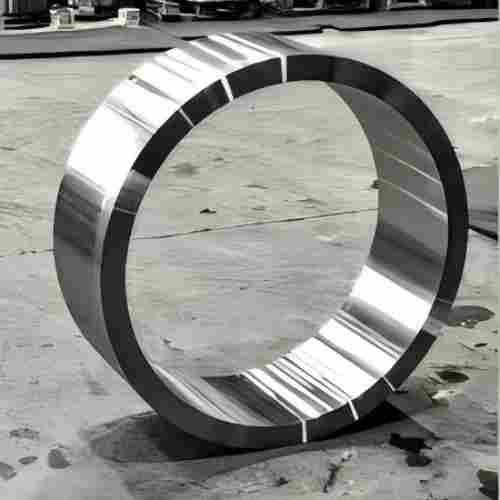
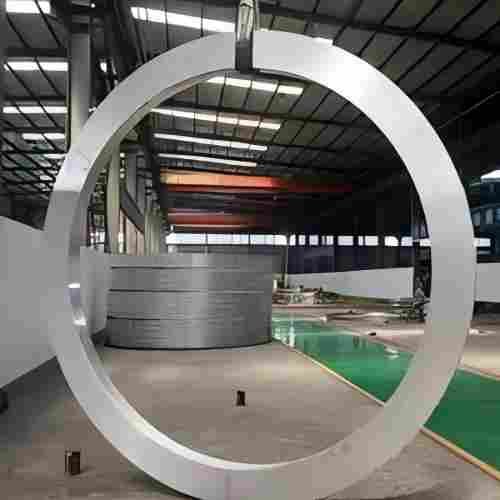
Aluminum forged rings are annular aluminum components produced through forging processes. Unlike cast or machined rings, aluminum forged rings are manufactured using hot forging—heating an aluminum billet to an optimal temperature (typically 350°C–550°C) and applying controlled compressive force in precision dies to induce plastic deformation, ultimately forming a ring-shaped structure.
TIPTOP has long supplied forged rings to manufacturers and traders worldwide; in addition to aluminum, we also provide semi-finished forged rings made from other materials.
2. Common Sizes of Aluminum Forged Rings and Our Company’s Maximum Capability
Typical Size Range
Outer diameter: 200 mm to 8000 mm (special ultra-large rings can reach over 10000 mm)
Height: 50 mm to 1500 mm
Wall thickness: 25 mm to 600 mm
Our company can produce aluminum forged rings with an outer diameter up to 8700 mm. Specific dimensions can be negotiated in detail according to customer requirements.
3. Performance Advantages of Aluminum as a Raw Material for Forged Rings
Aluminum features the following main performance advantages when used as a raw material for forged rings:
3.1 High Strength
Aluminum rings that have been forged possess high strength, durability, and reliability. They are resistant to the effects of deformation even when subjected to high stress levels. The process of forging modifies the metal’s internal structure and decreases the grain size leading to a remarkable increase in tensile and yield strength. 6061-T6 aluminum alloy, for example, has a tensile strength that can exceed 300 MPa.
3.2 Light Weight
One of the benefits of aluminum alloys besides the low density (approximately 2.7 g/cm³, a third of that of steel) is that they can be used to reduce weight significantly while still preserving strength. A forged aluminum ring and a steel one that are the same size have very different weights with the former being just about half of the latter. This is why aluminum is widely used in the aerospace and transportation sectors where the weight is a crucial factor.
3.3 Good Machinability
Aluminum alloys are characterized by ease of machining and can produce surfaces of very high quality. This makes them perfect for the production of precision components. It is possible to machine aluminum forged rings using CNC methods to obtain complex geometries and very precise dimensions.
3.4 Cost-Effectiveness and Recyclability
Manufacturing aluminum forged rings represents a very cost-effective option, mainly due to the extended life of the products and the reduced costs over time. What is more, aluminum alloys are extremely recyclable, contributing to the environmental aspect of sustainable manufacturing.
4. Applications of Aluminum Forged Rings and Common End Products
4.1 Aerospace
Aerospace is the most critical application field for aluminum forged rings. Aluminum accounts for over 90% of the structural material used in rockets. Aluminum alloy forged rings are key structural components connecting fuel tank barrels, forward/aft domes, and inter-stage sections of heavy-lift launch vehicles.
Major applications include:
Launch vehicles: Forged rings for the Long March series rockets connect and strap multiple stages of fuel tanks, serving as critical components for successful launches.
Aircraft structures: Load-bearing rings for landing gear, engine drive rings, turbine blade support rings, etc.
Spacecraft: Connecting rings and structural rings for space station core modules, satellites, and other spacecraft.
4.2 Transportation
In the automotive manufacturing sector, with the increasing popularity of new energy vehicles, the demand for lightweight components is constantly rising. Aluminum ring-shaped forgings are used in components such as wheel hubs and transmission shaft sleeves, effectively reducing vehicle weight and improving fuel efficiency.
Typical products include: integral wheel hubs for automobiles, spun blanks, aluminum alloy die forgings for passenger car wheel spokes, as well as crankshafts, connecting rods, and piston pins for engines, gears, shafts, and clutch discs for transmission systems. In the rail transportation sector, train wheels, axles, couplers, and other components also extensively utilize aluminum forgings.
4.3 New Energy
Aluminum forged rings are widely used in wind power, solar energy, and other new energy fields. In wind power, they serve as key connecting and supporting structures for large wind turbine generators.
4.4 Petrochemical and Power Generation
Aluminum rolled/forged rings are used to produce drill bits, compressor valves, drilling equipment, etc. In the power generation industry, they are widely used for key components of gas, steam, and water turbines. They are also applied in petrochemicals, mining machinery, nuclear power plants, and other fields.
4.5 Other Industrial Fields
Mechanical engineering: Key components in industrial gears, bearing retainers, pumps, valves, compressors, gearboxes, etc.
Pressure vessels: Connecting flanges for large pressure vessels and heat exchangers, skirt support rings for LNG storage tanks.
Heavy machinery: Inner and outer rings of slewing bearings, such as rotating platform components for cranes and excavators.
Military sector: High-performance forgings for weapon systems, armored vehicles, naval vessels, etc.
4.6 Typical Product Forms after Further Processing
After subsequent machining and heat treatment, aluminum forged rings are often made into the following products:
Product Form Main Function Typical Applications
Bearing rings Support rotating parts Precision machinery, slewing bearings
Flanges Pipe/equipment connection Pressure vessels, piping systems
Gear rings Transmission system components Industrial machinery, wind power gearboxes
Seal rings Sealing devices Aero engines, hydraulic systems
Wheel hub blanks Wheel bodies Automotive, new energy vehicles
Connecting rings Structural connections Rocket inter-stage connections, aircraft structures
5. Forging Processes for Aluminum Forged Rings
The forging processes for aluminum alloy rings are mainly divided into open-die forging and closed-die forging (ring rolling), each with its own scope and technical characteristics.
5.1 Open-Die Forging
When ring sizes are very large (e.g., several meters in diameter) or only a small number of prototype parts are required, open-die forging is the most economical and flexible method. The typical process is:
Cutting: Calculate billet weight based on final ring dimensions and metal allowance; saw aluminum bar stock into pieces.
Heating: Heat the pieces uniformly to the hot working temperature (350°C–550°C) for high plasticity and low deformation resistance.
Upsetting & Piercing: Upset the heated billet into a disc on a press, then punch a hole in the center.
Mandrel expansion (ring rolling): Place the pierced disc onto a mandrel; apply radial pressure using a press and specialized tools, causing the ring to rotate, wall thickness to decrease, and diameter to expand.
Advantages: Simple tooling, no expensive dedicated dies, capability to produce rings of virtually unlimited size. Suitable for custom ultra-large flanges and connecting rings in R&D, energy, etc.
5.2 Closed-Die Forging (Ring Rolling)
When high-volume production of dimensionally and performance‑consistent rings is required, dedicated ring rolling processes offer significant advantages. The typical process is:
Preforming: Similarly includes upsetting, piercing, etc., to obtain a ring preform.
Radial-axial ring rolling: Place the preform into a professional ring rolling mill. The main roll and mandrel roll apply strong radial rolling, while axial rolls control ring height, precisely rolling the ring to a pre‑defined cross‑section and size.
Near‑net shape: This advanced near‑net shape technology uses coordinated radial‑axial deformation to achieve full plastic deformation and volume transfer as the ring expands in diameter.
Advantages: High productivity, excellent dimensional accuracy, good surface finish, continuous grain flow along the circumference, and superior mechanical properties. Particularly suitable for bearing rings, slewing rings, gear rings, and other standard or profiled cross‑section rings.
6. FAQ
6.1 What are the core advantages of aluminum forged rings over cast rings?
Aspect Forged Aluminum Ring Cast Aluminum Ring
Microstructure Fine, dense grains; directional grain flow; no porosity or gas holes Coarse grains; possible porosity and shrinkage cavities
Strength High tensile & yield strength, significantly better than cast Adequate in compression, weaker under tension/shock
Toughness/Impact resistance Superior, less prone to fracture, good vibration damping Brittle, poor impact toughness
Fatigue life Significantly longer Shorter
Weight Lighter for same size, higher density Typically 15-20% heavier than forged rings
Dimensional accuracy High, near‑net shape, less machining allowance Lower, requires substantial machining
Material utilization High, especially for profiled rings Moderate
Production efficiency Longer single‑piece lead time, suited for small to medium batches Suited for high‑volume production
6.2 What post‑forging heat treatments are required? Can you provide full treatment services?
After forging, aluminum rings typically undergo heat treatment to optimize mechanical properties. Common processes include:
Solution treatment: Heat the forging to a relatively high temperature (generally 490°C–560°C, depending on alloy grade), hold to dissolve alloying elements, forming a supersaturated solid solution, then rapidly water quench. Example: ~495°C for 2024 alloy, ~560°C for 6082 alloy.
Aging treatment:
Natural aging (T4): After solution treatment, allow natural precipitation of strengthening phases at room temperature.
Artificial aging (T5/T6/T7): Heat in the range of 93°C–245°C.
Temper designations:
T4: Solution treated + naturally aged
T5: Cooled from elevated temperature forming + artificially aged (no separate solution treatment)
T6: Solution treated + artificially aged (full aging for maximum strength)
T7: Solution treated + overaged/stabilized
T73/T74: Solution treated + double aging (for improved stress corrosion resistance)
Annealing: Heat to 350°C–450°C, hold, then furnace cool slowly. Purpose: relieve residual forging stresses, homogenize structure, restore plasticity.
Our company is ISO 9001 certified and has a complete production line from melting and forging to heat treatment, offering full heat treatment services.
6.3 What are our advantages in producing aluminum forged rings?
(1) Technical & Equipment Advantages
Large forging presses enabling production of ultra‑large aluminum forged rings.
Advanced CNC radial‑axial ring rolling mills for precise dimension and shape control.
Mastery of integral forming technology for profiled rings, achieving higher material utilization and better product performance.
(2) Quality & Certification Advantages
ISO 9001 quality management system certification.
Complete quality inspection equipment.
Third‑party testing and reports (chemical composition, mechanical properties) available upon request.
(3) Material System Advantages
Comprehensive alloy portfolio: 2xxx (2024, 2219, 2618), 5xxx (5A06), 6xxx (6061, 6082, 6151), 7xxx (7075, 7050) series, among others.
Customized material solutions and performance optimization based on customer needs.
(4) Service & Support Advantages
Full‑process one‑stop service: design, melting, forging, heat treatment, finishing, and testing.
Customized dimensional and non‑standard profiled ring development capabilities, with rapid response to customer requirements.
Professional technical team available to participate in product design and process optimization at the early stage.


Reviews
There are no reviews yet.