
Description
1. Brief Introduction to Aluminum Forged Shafts
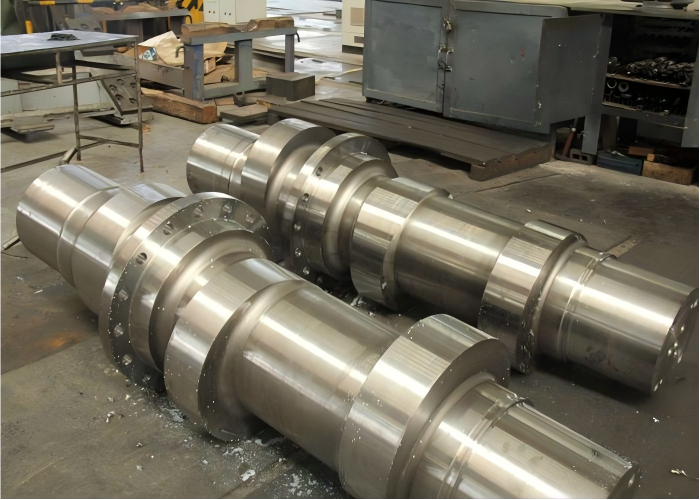
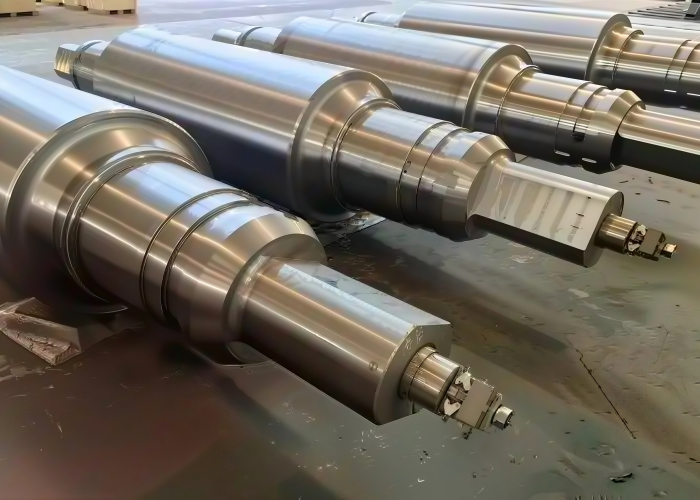
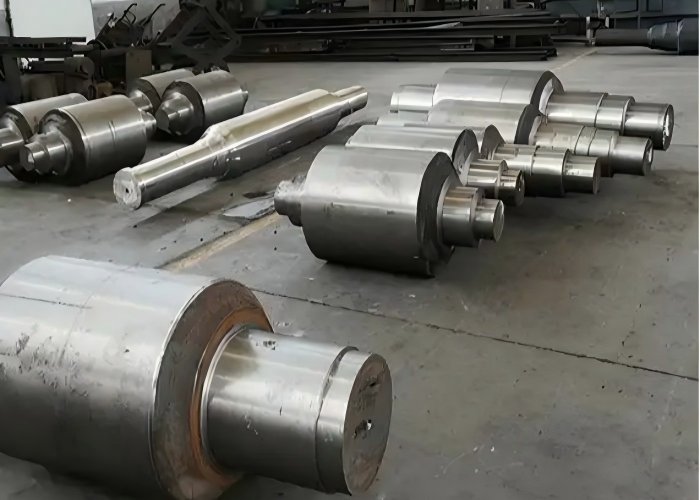
Aluminum forged shafts are lightweight transmission shaft components made from aluminum alloy through high-temperature forging. They feature a dense overall structure, high strength, light weight, good corrosion resistance, and excellent thermal conductivity, combining high strength with lightweight advantages. They are widely used in lightweight equipment, high-speed transmissions, precision machinery, new energy equipment, and other applications. Compared to steel shafts, they significantly reduce weight, resulting in notable energy savings and consumption reduction.
2. Most Frequently Used Material Grades for Forged Aluminum Shafts
Standard materials include those in the following categories:
- Carbon Steel: The most affordable and rational selection; provides great machinability and is capable of handling normal operating conditions.
- Alloy Steel: The backbone of most industrial applications.
- Stainless Steel: It has very good corrosion resistance and can even be used in a hostile environment with moisture, acids and alkalis.
- High-Temperature Alloys: Have low density and are very light. These features make them very suitable for light-weighting oriented applications.
Besides the mentioned above, aluminum and titanium alloys are also used in the production of various types of forged shafts.
Most frequently used material grades are the following:
- 6061: A general workhorse grade that offers a good balance of toughness, ease of machining and cost-effectiveness.
- 6063: Has good ductility and is very suitable for the manufacture of lightweight, micro shaft components.
- 7075: An aerospace-grade, high-strength forged aluminum alloy. It has the highest tensile strength and at the same time provides better load bearing ability and wear resistance.
- 2A12 (LY12): High strength and wear resistance mark this alloy, which distribution wide mechanical transmission systems.
- 5083: Very corrosion resistant and rust resistant; ideal for marine and outdoo use.
3. Different Types of Forged Shafts
There are different types of forged shafts and one can categorize them by different classification criteria. One can classify them based on the processing technique used in particular: Open-die forged shafts, closed-die forged shafts, ring-rolled shafts, and precision-forged shafts.
Cold-forged shafts: This technique is often used for making small shaft parts that require very high dimensional accuracy—like those of the precision machinery or automotive components.
Hot-forged shafts: This is by far the most popular forging technique for large steel shafts, given that it allows the material to preserve its original strength and structure throughout the deformation process.
Isothermal-forged shafts: This method not only reduces the heat flow changes and thus, the gradients in the final product, but also leads to the uniform flow of material, which results in mechanical properties of the finished product that are much better.
4. Common Applications of Forged Shafts
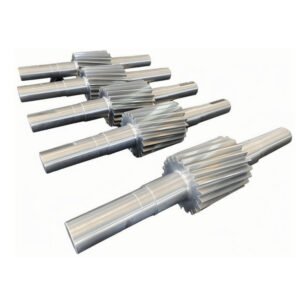
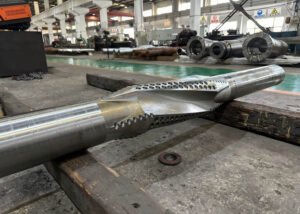
Petroleum machinery, top drive transmission shafts for drilling rigs, main shafts for construction machinery, wind power transmission shafts, motor main shafts, reducer gear shafts, agricultural machinery transmission shafts, mining equipment shafts, marine transmission shafts, new energy equipment shafts, automotive half-axes, hydraulic equipment main shafts, precision instrument transmission components, etc.
5. Main Manufacturing Process of Forged Shafts
Material inspection → Cutting → Heating → Forging → Cooling → Heat treatment → Machining → Non-destructive testing → Surface treatment
6. What is the maximum weight of forged shafts you can produce?
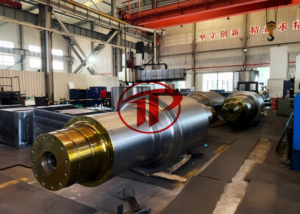
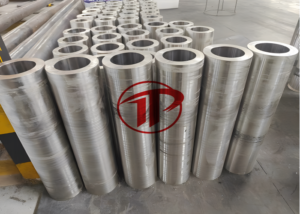
Our company can produce single-piece solid/hollow forged shafts with a maximum net weight of 20 tons, diameter range of 30mm–1600mm, and maximum length of 12 meters. Both standard and custom sizes are available.
7. Advantages of Forged Shafts over Cast or Machined Shafts
Casting involves pouring molten metal into a mold to solidify. Its advantages are the ability to produce complex geometries and large components at relatively low cost. However, the solidification process inevitably introduces internal defects such as porosity, gas holes, shrinkage cavities, and inclusions, along with coarse and randomly oriented grain structures. These inherent shortcomings significantly reduce material strength, toughness (especially impact toughness), and fatigue life, making cast parts potential failure sources in high-stress applications.
In contrast, forged shafts undergo forced plastic deformation, which effectively eliminates the above internal defects, resulting in a fine and uniform grain structure. Their mechanical properties are far superior to those of cast shafts.
8. Advantages of Our Company in Producing Forged Shafts
- In-house integrated production line for forging, heat treatment, and precision machining – full process control.
- Genuine materials with strict quality control; full material certificates, mechanical property reports, and inspection reports available.
- Expertise in producing large, extra-long, and extra-heavy forged shafts; mature and stable large-section quenching and tempering process.
- 100% non-destructive testing before shipment; quality strictly meets standards, compatible with OEM supporting requirements.
- Reliable delivery times; capable of handling rush orders, batch orders, and accepting customer-supplied materials.
- Ability to adjust hardness, strength, and toughness according to service conditions to suit different environments.
- Extensive industry experience; provide professional technical solutions for material selection, process optimization, and service condition adaptation.

Reviews
There are no reviews yet.