
Description
1. 4330V Solid Forged Bar – Brief Introduction
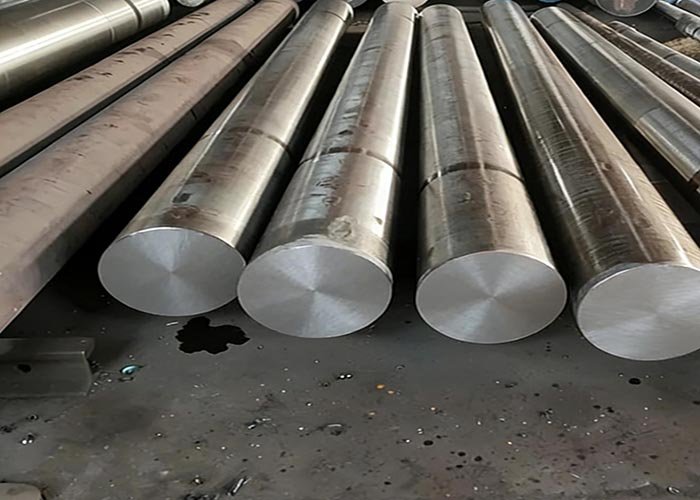
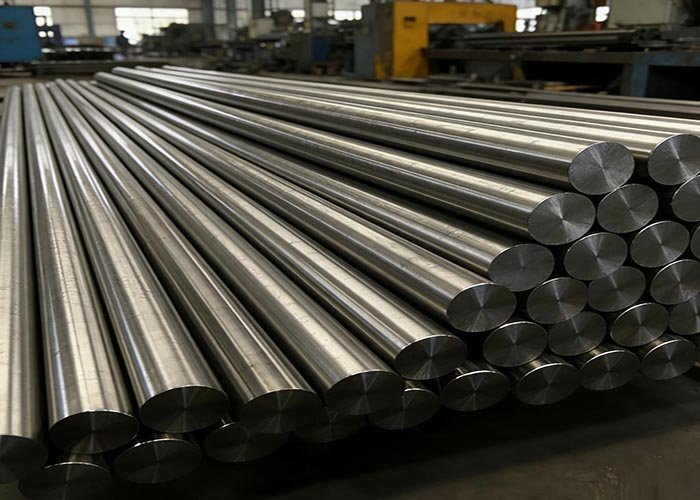
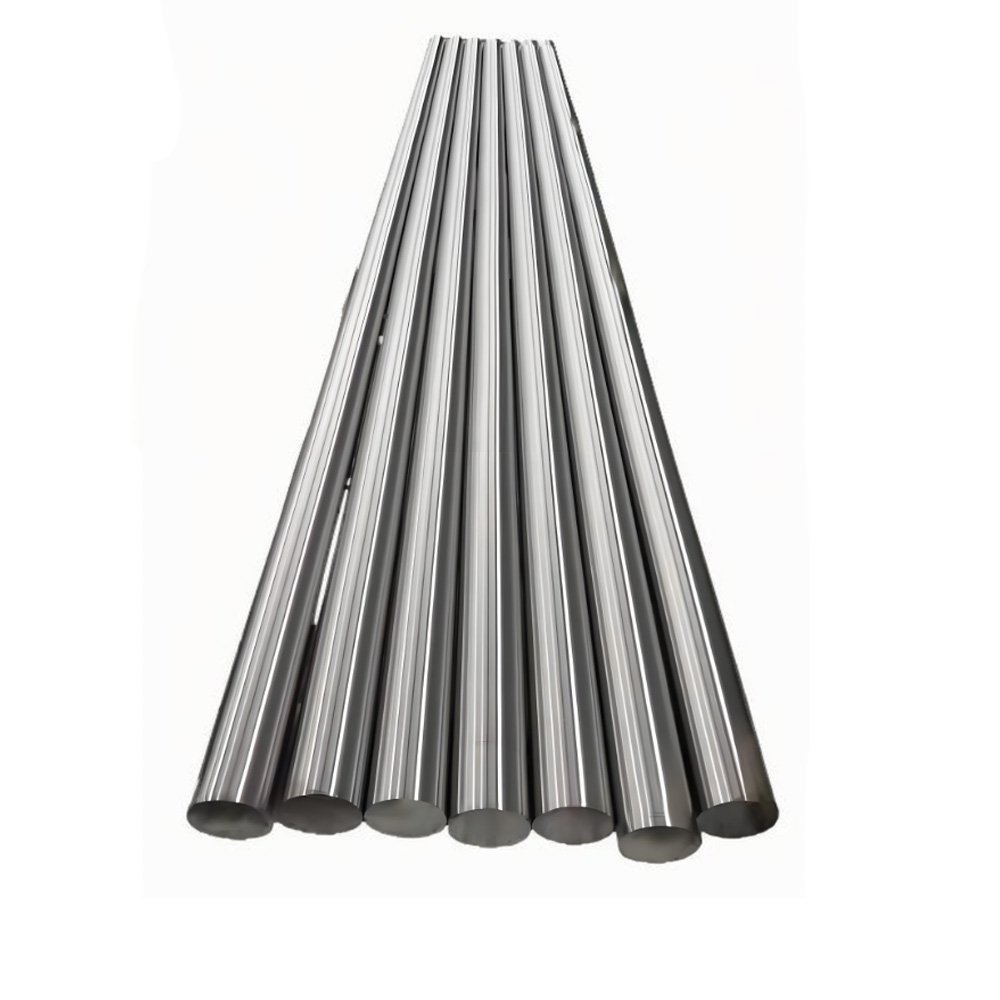
4330V is a low-alloy steel conforming to the American AISI/SAE series. After quenching and tempering (Q+T), this material exhibits very high strength combined with good ductility and impact toughness. It is widely used for large-diameter drilling tools and other severe service conditions involving high stress and shock loading.
By adding vanadium (V) to the base composition of 4330, 4330V offers improved hardenability, fatigue strength, and toughness. It is extensively applied in oil & gas, aerospace, power generation, and defense industries.
2. Typical Chemical Composition & Mechanical Properties of 4330V Solid Forged Bar
2.1 Chemical Composition
Element Content Range (wt%)
| Element | Content Range (wt%) |
| C | 0.28–0.33 |
| Si | 0.20–0.30 |
| Mn | 0.75–1.00 |
| P | ≤0.015 |
| S | ≤0.005 |
| Cr | 0.75–1.00 |
| Mo | 0.35–0.50 |
| Ni | 1.65–2.00 |
| V | 0.05–0.10 |
2.2 Mechanical Properties
4330V is normally supplied in the quenched and tempered (Q+T) condition, available in multiple strength levels (135 ksi, 150 ksi, 155 ksi, etc.).
| Strength Grade | Yield Strength (0.2% PS) | Tensile Strength (UTS) | Elongation | Reduction of Area | Hardness (HRC) | Hardness (HBW) |
| 135 ksi | ≥135 ksi (≥931 MPa) | ≥145 ksi | ≥14% | ≥50% | 30–36 | 286–341 |
| 150 ksi | ≥150 ksi (≥1034 MPa) | ≥160 ksi | ≥14% | ≥45% | 34–40 | 319–371 |
| 155 ksi | ≥155 ksi (≥1069 MPa) | ≥165 ksi | ≥14% | ≥45% | 34–40 | 319–371 |
Typical impact properties (CVN):
CVN @ 23°C: ≥54–65 J
CVN @ -20°C: ≥30–32 J
3. Applications of 4330V Solid Forged Bar – Common Oilfield Drill Tools
3.1 Main Application Areas
- Oil & Gas: oil tools, downhole tools, drill pipe, heavy-weight drill pipe, etc.
- Aerospace: aircraft landing gear struts, helicopter rotor shafts, bolted connections, airframe structures
- Power Generation & Defense: high-strength structural components
- Mining Machinery: impact-loaded parts, drive shafts, gears
3.2 Common Oilfield Drill Tools
- Spiral drill collars – withstand extremely high drilling pressure and complex geological stresses, ensuring stable deep-well drilling.
- Heavy-weight drill pipe (HWDP) – transmit power, withstand high torque and alternating loads.
- Kelly bars (square/hex drive pipe) – drilling power transmission.
- Short drill pipe – connections in complex well sections.
- Drilling jars (while drilling) – applications with high-intensity impact.
- Downhole tool joints – withstand high pressure, high temperature, and high stress in extreme environments.
4. Main Manufacturing Process Flow for 4330V Solid Forged Bar
4.1 Melting
Electric Arc Furnace (EAF) used in combination with Ladle Refining (LF) and Vacuum Degassing (VD) – controlling the cleanliness of molten steel very strictly to minimize the levels of gases and inclusion of nonmetallics.
4.2 Ingot Casting / Continuous Casting
Bottom pouring, or casting into a ladle filled with argon gas, followed by continuous casting method.
4.3 Preheating (before forging)
Slow preheating to 1050–1230°C to ensure uniform heating of steel.
4.4 Forging
The temperature at which forging will be started is 1065–1235°C while the temperature at which the completion of the forging will be done should not be less than 850°C.
The forging ratio is usually ≥3:1, and ≥4:1 for higher strength requirements.
Slow cooling after forging (e.g., in ash or lime) to avoid cracking.
4.5 Post-Forging Heat Treatment
Normalizing (870–890°C followed by air cooling) is normally done to remove the stresses of forging and to refine the grain size. The normalizing operation is followed by annealing (830–860°C, furnace cooling) which is done to enhance the machinability.
4.6 Performance Heat Treatment (Quenching & Tempering)
Heat to 870–880°C (heating rate ~200°C/h), hold for 2.5–3 hours, then rapidly water quench or oil quench to below 40°C. Then temper at 600–620°C, hold appropriate time, followed by water or air cooling – resulting in a tempered martensite (sorbite) structure for optimal strength-toughness balance.
4.7 Finishing
Surface turning, grinding, straightening; rough or finish machining as required.
4.8 Quality Inspection
Chemical analysis, mechanical property testing, non-destructive testing (ultrasonic testing, magnetic particle inspection, etc.).
5. Maximum Diameter & Length of 4330V Forged Bar We Can Supply
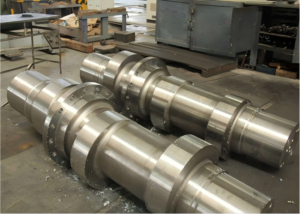
- Diameter range: Φ80 mm – Φ1200 mm (forged products); large forgings up to Φ6000 mm
- Length range: 0.5–16 meters (cut-to-length available on request)
- Hollow forgings: OD ≤3000 mm, max length ≤9000 mm
The maximum diameter and length depend on the customer’s specific requirements for strength grade, weight, and delivery condition. Customized production is available.
6. Advantages of 4330V Compared to Standard AISI 4140 / 4340
6.1 Fundamental Alloy System Differences
- AISI 4140 – Basic Cr-Mo steel, no Ni or V addition. Lowest cost, cost-effective general-purpose material.
- AISI 4340 – Adds Ni to 4140, becoming Ni-Cr-Mo steel. Significantly higher strength and hardenability.
- 4330V – “Tuned version” of 4340. Retains the Ni-Cr-Mo system plus a micro-addition of vanadium (V), with slightly reduced carbon content. Designed for extreme service conditions.
6.2 Comparison of Strength, Hardenability & Impact Toughness
- Hardenability & section size: 4330V has the best hardenability among the three. Thanks to vanadium, it achieves uniform high strength and hardness across very large diameters. AISI 4340 is “very good”, while AISI 4140 is “good” but limited in larger sections.
- Strength level: AISI 4340 has the highest upper limit (130–200 ksi / 896–1379 MPa). 4330V offers stable high strength of 135–165 ksi (931–1138 MPa). AISI 4140 provides typical 110–150 ksi (758–1034 MPa).
- Impact toughness (especially low temperature): 4330V is superior due to improved Charpy V-notch (CVN) toughness, performing exceptionally well under low-temperature and impact conditions. AISI 4340 is “good”, AISI 4140 is “fair”.
6.3 Manufacturing & Application Positioning
- AISI 4140: High cost-performance – sufficient for ordinary mechanical structures, drive shafts, gears.
- AISI 4340: Ultra-high strength heavy-duty parts such as aircraft landing gear and heavy drive shafts.
- 4330V: The go-to material for extreme critical components requiring very high strength + frequent impact loading + notch toughness + low-temperature performance – e.g., deep-well oil drilling tools.
7. Our Advantages in Producing 4330V Forged Bars
7.1 Manufacturing Capability – From Large Sizes to Fine Customization
At TIPTOP FORGING, we have industry-leading large-section production capabilities:
- Forged bar diameter: full coverage from Φ80 mm to 1200 mm
- Length: 0.5 to 16 meters, cut-to-length on request
- Large forgings up to Φ6000 mm in diameter
- Wide range of delivery conditions: black surface, ground, turned, rough machined, finish machined, or fully machined to customer drawings
7.2 Quality Assurance – 100% NDT & International Certification
We do not use random sampling. During production, we perform three chemical checks and two post-forging UT inspections. Before shipment, every bar undergoes 100% ultrasonic testing – no white spots, cracks, or inclusions. Our facility is ISO9001 certified.
7.3 Industry Expertise – We Know Both Products & Applications
Beyond hard manufacturing capabilities, we provide deep technical support and application knowledge.
8. Does 4330V Forged Bar Meet NACE MR0175 / ISO 15156 (Sour Service)?
Yes.
Key requirements for compliance:
- This standard applies to equipment materials used in H₂S environments in oil & gas production, including downhole tools, valves, and piping components.
- Meeting the standard requires strict control of chemical composition, heat treatment process, and maximum hardness (typically ≤22 HRC, or as per specific API 6A requirements).

Reviews
There are no reviews yet.