Heavy Forged Blocks with Verified Internal Integrity — Not Just Surface Quality
You’re Not Buying Steel — You’re Buying Process Safety
A single hidden defect inside a large forged block can cost months of machining time, missed delivery deadlines, and six-figure losses.
At TIPTOP, we engineer forged blocks not just for strength — but for internal soundness you can verify before machining begins.
✔ Forging Ratio ≥ 3.5:1
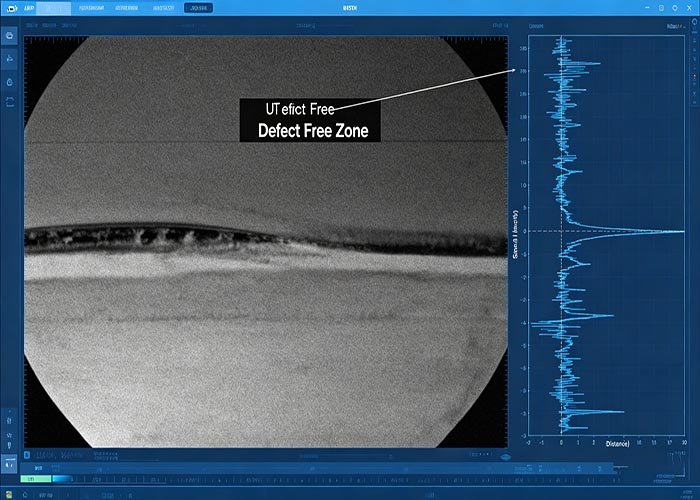
✔ 100% UT Scanning (Full Section Coverage)
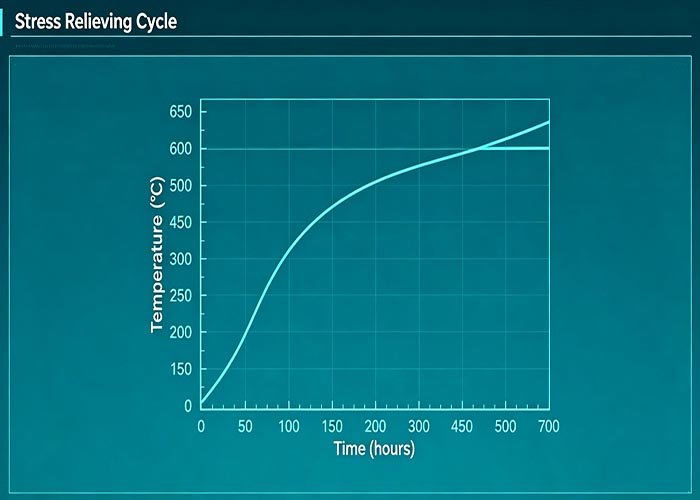
✔ Long-Cycle Stress Relieving Annealing
Beyond the Surface: Solving the “Hidden Defects” in Heavy Forged Blocks
Most suppliers can guarantee hardness or tensile strength on the surface.
But when block thickness exceeds 800 mm, the real risk lies deep inside:
- Central porosity
- Segregation
- Incomplete densification
These are not visible — until it’s too late.
Why Conventional Forging Fails in Large Blocks
Standard presses simply cannot transmit sufficient deformation energy into the core.
Result:
- Outer layer: acceptable
- Core: still retains cast structure
How TIPTOP Eliminates Internal Defects
We don’t just “forge bigger.” We forge deeper.
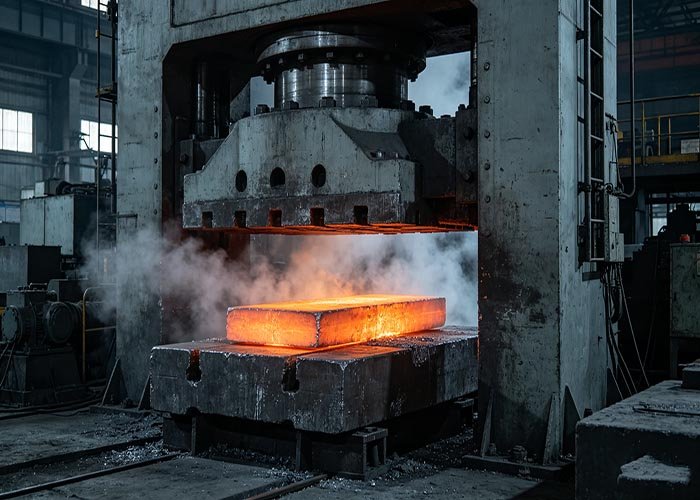
16,500-Ton Hydraulic Press + Wide Die & High Reduction Strategy
This is not basic deformation:
- High reduction ratio forces plastic flow through the entire cross-section
- Breaks down dendritic cast structures
- Compacts internal voids and micro-porosity
That means:
- Every block undergoes sufficient deformation cycles
- Internal structure is fully consolidated
- Fatigue performance improves by 40%+ vs conventional forgings
Full Inspection Process for Forged Blocks (ASTM A388 & SEP 1921)
“We don’t perform spot inspection — we perform full-volume ultrasonic scanning.”
For critical forged blocks (e.g. H13 tool steel):
✔ Full-section UT scanning
✔ Verified internal homogeneity
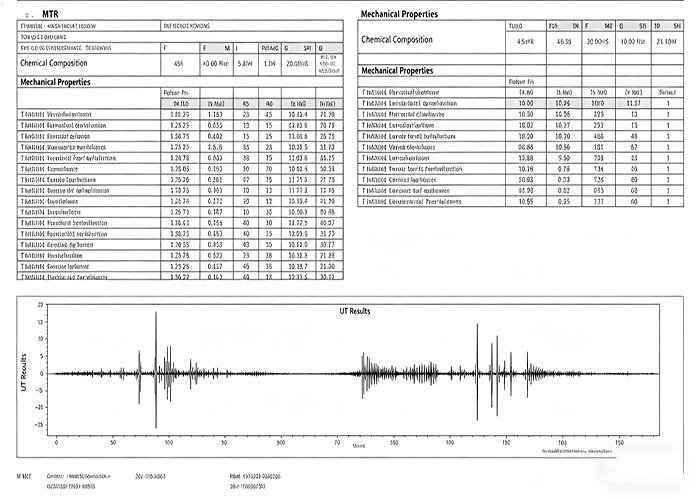
✔ Traceable inspection records
Zero-Defect Guarantee for Critical Blocks
If internal defects are discovered during machining, TIPTOP provides full replacement or refund.
This is not a claim — it’s a commitment backed by process control.
Material Expertise Built Around Your Application
Different applications fail in different ways. We engineer forged blocks accordingly.

Forged Blocks for Oil & Gas Components (4130 / 4140)
- Materials: 4130 / 4140
- Focus: purity & toughness under pressure
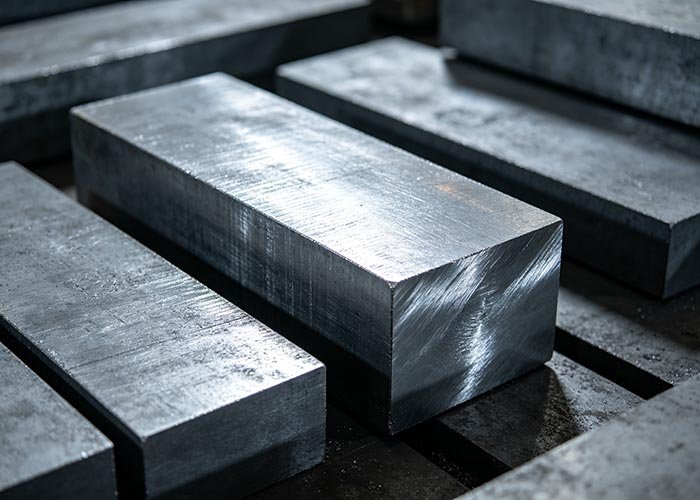
H13 Forged Blocks for Tooling and Die Manufacturing
- Problem: transverse impact toughness
- Solution: ESR (Electroslag Remelting) + controlled forging
Large Forged Blocks for Heavy Machinery and Press Frames
- Materials: S355 / Q345
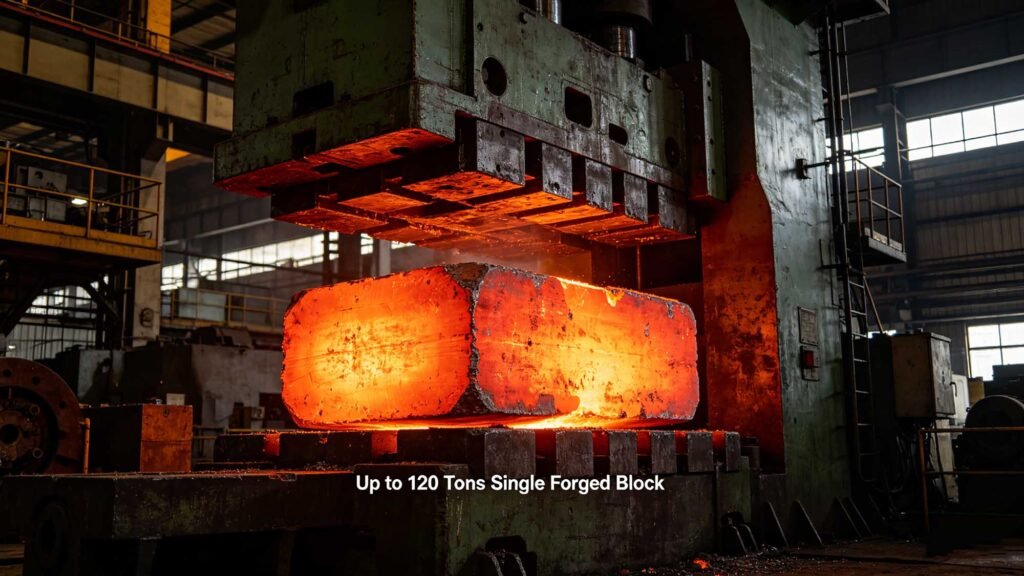
- Weight: up to 120 tons
Focus:
- uniform internal structure
- minimized residual stress
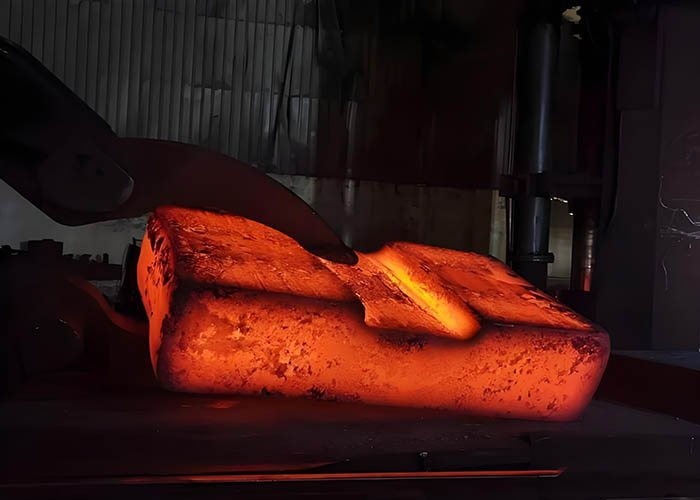
Case Study: 80-Ton Forged Blocks for a 15,000-Ton Hydraulic Press Frame
- Industry: Heavy equipment manufacturing
- Challenge: Internal stress + machining deformation risk
- Solution:
- 16,500T press forging
- Long-cycle stress relieving annealing
Result:
Stable machining performance with no internal defects detected.
Frequently Asked Questions: Heavy Forged Blocks
A: This is our core strength. For large-section blocks, we utilize our 16,500-ton hydraulic press to ensure a high forging ratio ($\ge 3.5:1$). Unlike smaller presses that only deform the surface, our massive pressure penetrates to the very core, crushing the as-cast dendritic structure and eliminating central porosity. We guarantee that the "Heart of the Block" is as dense and tough as the surface.
A: We strictly adhere to international standards such as SEP 1921-84 (Class C/c, D/d, or E/e) and ASTM A388. For high-precision mold applications (like H13 or 1.2344), we provide 100% volumetric UT scanning. Each block is delivered with a comprehensive UT Report, ensuring there are no hidden cracks, inclusions, or voids that could ruin your final machining.
A: The main reason for warping or cracking during machining is residual stress. We implement a Long-cycle Stress Relieving Annealing process after rough machining. By holding the blocks at specific temperatures for extended periods, we neutralize internal stresses. This ensures that when you perform heavy milling or wire cutting, the block maintains its dimensional stability without unexpected deformation.
A: Absolutely. While we frequently work with alloy steels like 4140, 4340, and 8620, we specialize in high-performance grades including:
Tool Steels: H13 (1.2344), D2 (1.2379), P20.
Stainless Steels: 304L, 316L, 17-4PH, F51 (Duplex).
Carbon Steels: S355J2G3, 1045, A105. We also support ESR (Electro-Slag Remelting) for projects requiring extreme material purity.
A: Thanks to our open-die forging capabilities, we can produce rectangular blocks weighing up to 120 tons (120,000 kg) per unit. We can handle lengths up to 6,000 mm and widths up to 3,500 mm. Whether it’s a massive press foundation or a compact high-pressure manifold, we have the scale to deliver.
A: Yes, we highly encourage it. We regularly work with SGS, BV, TUV, and ABS. We provide full access to our testing labs for TPI inspectors to witness chemical analysis, mechanical testing, and UT scanning. A 3.1 Material Test Report (MTR) is provided as standard for every order.
Start with Engineering — Not Just Quotation
Not just forged steel blocks —
✔ Internal structural integrity
✔ Verified inspection data
✔ Reduced machining risk
✔ Predictable performance