ASTM A36
It is a widely used low-carbon structural steel known for its excellent weldability, formability, and cost-effectiveness. ASTM A36 is commonly supplied as hot-rolled plates, bars, or shapes.
Descriptions
1. Chemical Composition
ASTM A36 is defined by its balanced composition, prioritizing weldability and strength over machinability. Its chemical composition (weight %) typically adheres to the following ranges:
| Element | Content (%) |
| Carbon (C) | ≤0.25-0.29 |
| Manganese (Mn) | 0.80-1.20 |
| Phosphorus (P) | ≤0.040 |
| Sulfur (S) | ≤0.050 |
| Copper (Cu) | ≥0.20 (for corrosion resistance) |
| Iron (Fe) | Balance |
2. Mechanical Properties
Mechanical properties for hot-forged ASTM A36 vary slightly from hot-rolled forms due to grain refinement during forging. Typical values include:
| Property | Value |
| Tensile Strength | 400-550MPa(58-80ksi) |
| Yield Strength | 250 MPa (36 ksi) |
| Elongation (200mm) | 20-23% |
| Hardness | 119-159HB (Brinell) |
| Impact Energy (Charpy V-notch) | 27-34 J(20-25 ft-1b) at 21°C |
3. Key Advantages
Superior Weldability: Low carbon and sulfur content minimize cracking risks.
Cost-Effective: Widely available and economical for large-scale projects.
Ductility: High elongation ensures resistance to sudden impacts.
4. Limitations
Low Hardness: Not suitable for wear-resistant applications without surface treatments.
Limited High-Temperature Performance: Loses strength above 400°C (750°F).
Moderate Strength: Outperformed by high-carbon or alloy steels in high-stress scenarios.
Recent products
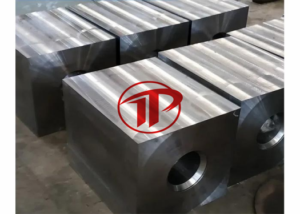
42CrMo4 Large Alloy Steel Forged Block For Hot Forging Mould
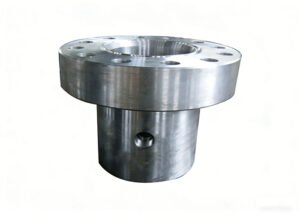
API 6A 4130 Alloy Steel Casing Head Forging for Wellhead
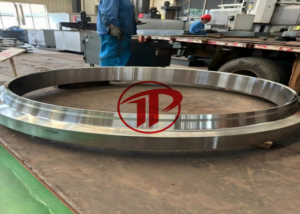
Vessel Transition Section Forging
CONTACT US
Address
B-2007,Chuanmei Building,Taishan Street,Taian City,Shandong, China
Call Us
+86 0538 6368027
Email Address
Sales@tiptopforging.com
Standards & Certifications
ASTM A36/A36M: Standard specification for carbon structural steel.
ASTM A668: Standard for carbon and alloy steel forgings for industrial use.
ASME SA-36: Pressure vessel and boiler applications.
Applications
a. Structural Supports
Pipe Supports and Brackets:
Forged brackets and base plates for pipeline systems and wellhead equipment.Platforms and Walkways:
Non-critical structural parts for offshore platforms and onshore facilities.
b. Surface Equipment
Flanges and Fittings:
Low-pressure flange forgings for auxiliary piping systems.Tank and Vessel Components:
Manway covers, lifting lugs, and reinforcement rings for storage tanks.
c. Drilling Rig Assemblies
Mast and Derrick Components:
Forged connectors and bracing elements for rig structures.
d. Limitations:
Not suitable for sour service (H₂S environments) due to corrosion susceptibility.
Avoided in pressure vessels or dynamic-load parts (e.g., drill collars, BOP components).
a. Material Handling Systems
Conveyor Frames and Rollers:
Forged structural sections for conveyor systems transporting bulk materials.Chutes and Hoppers:
Reinforced liners and support brackets for ore chutes.
b. Machinery Components
Crusher and Mill Frames:
Non-wear parts like mounting plates and housing supports.Shovel and Dragline Brackets:
Heavy-duty brackets for mining excavators.
c. Infrastructure
Tunnel Support Systems:
Forged beams and connectors for underground mine reinforcement.Ventilation Ductwork:
Brackets and flanges for airflow management systems.
d. Limitations:
Poor wear resistance; unsuitable for direct contact with abrasive materials (e.g., crusher jaws).
Low impact toughness in sub-zero environments; alternatives like ASTM A516 may be required.
Construction: Structural brackets, base plates, and anchor bolts.
Infrastructure: Bridge components, crane hooks, and heavy-duty fasteners.
Machinery: Gears, shafts, and connecting rods in low-to-medium stress environments.
Energy: Support frames, flanges, and pipeline components.