
Description
I. Introduction to 4145H Forged Bar
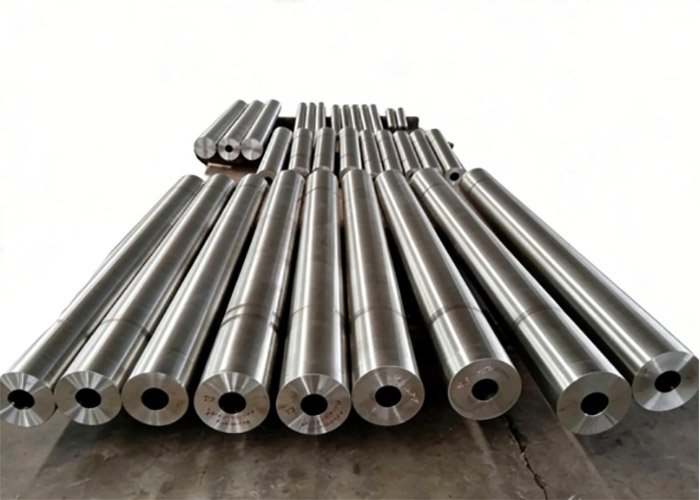
4145H is a chromium-molybdenum (Cr-Mo) low-alloy tempered steel, belonging to the guaranteed hardenability steel grade (the “H” stands for “guaranteed hardenability”). Through optimized chemical composition and heat treatment processes, this material achieves excellent hardenability and comprehensive mechanical properties, enabling it to meet the demands of high-strength working environments.
4145H forged bars are primarily produced using an Electric Arc Furnace + Secondary Refining process, and the product standards cover API 7-1 and NS1 specifications, meeting the reliability requirements of the oil drilling industry. The material has a maximum service temperature of up to 420°C and exhibits good resistance to corrosive liquids such as hydrogen sulfide and carbon dioxide. As a core raw material in the manufacture of oil drilling tools, 4145H forged bars are widely used in oil drilling equipment operating at depths of 1,000 to 3,000 meters underground. It is a high-value-added steel material with large consumption and high technical content in oil exploration and production equipment.
II. Typical Mechanical Properties of 4145H Forged Bar
| Typical Mechanical Properties | ||
| Yield Strength @ 0.2% | 130,000 min~165,000 max psi | |
| Tensile Strength % | 145,000 psi min | |
| Elongation % in 2″ Gauge Length | 13% min | |
| Impact Test Temperature | 70 ºF (RT) | -4 ºF (± 5 °F) |
| Impact Value (avg. of 3 specimens) | 40 ft-lbs min | 35 ft-lbs min |
| Impact Value (individual min.) | 35 ft-lbs min | 24 ft-lbs min |
| Surface Hardness | 302-363 HBW | |
| Straightness | 1/160 inch per foot | |
III. What are the classifications of AISI 4145H forged bars?
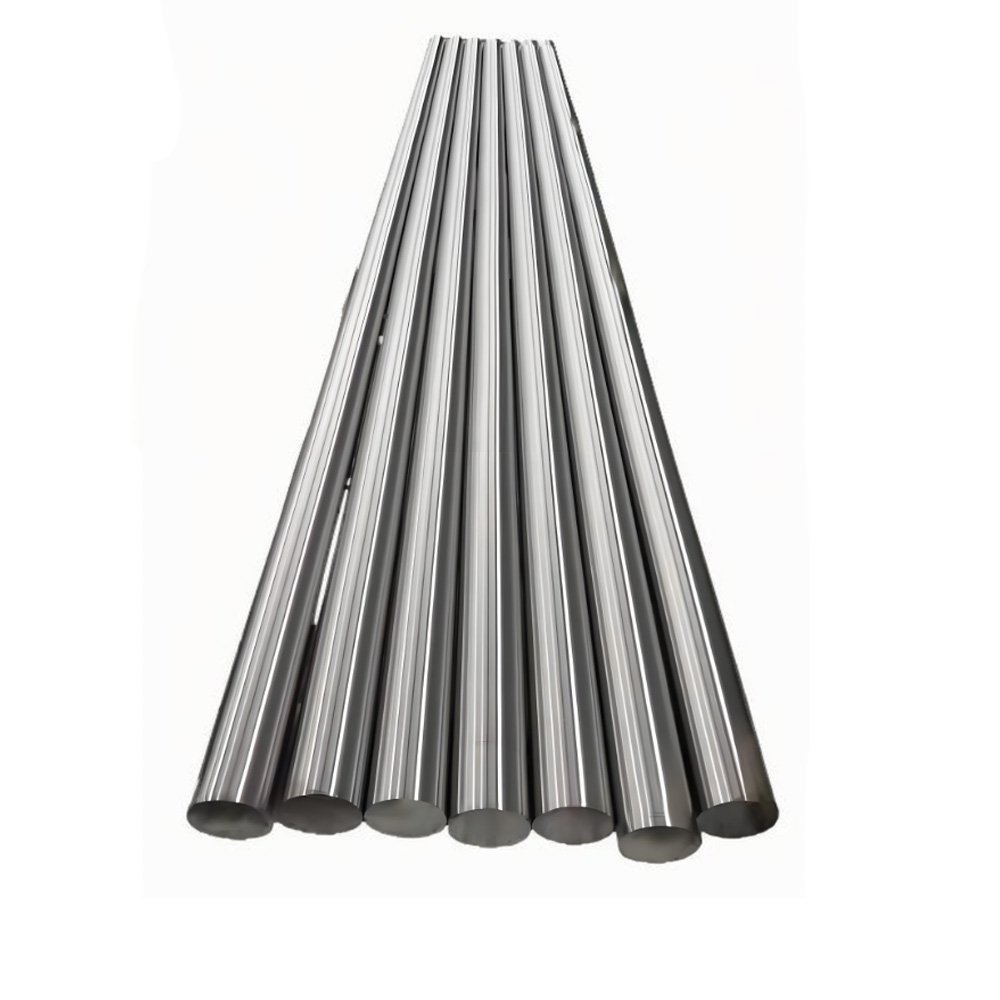
4145H round bars are mainly classified into the following types based on surface finishing condition:
Black/Unpolished Round Bars:Supplied directly after forging, with the oxide scale retained on the surface. Suitable for subsequent rough machining.
Turned/Peeled Round Bars:Machined by turning, resulting in a smooth surface and relatively high dimensional accuracy.
Drawn/Pulled Round Bars:Processed by cold drawing, resulting in a smooth surface and tight dimensional tolerances. Suitable for precision machining requirements.
IV. What are the main production processes for 4145H forged bars?
- Melting Process
The melting route adopts Electric Arc Furnace (EAF) + Ladle Furnace (LF) + Vacuum Degassing (VD). Through strict control of the chemical composition, gases and harmful impurities are removed to the greatest extent, ensuring the cleanliness of the molten steel.
- Ingot Casting / Continuous Casting
The qualified molten steel is made into steel billets via ingot casting or continuous casting. Continuous casting rectangular billet technology can be used for producing drill collar steel.
- Forging Process
Forging Temperature: Preheat the steel billet to 1150~1200°C for forging; the temperature should not fall below 850°C during the forging process.
Forging Deformation:The steel billet is forged into the required size of forged bars through processes such as rotary precision forging and open-die forging. For heavy components like thick-walled long tubes, rotary precision forging can be used.
Post-Forging Cooling: Strictly control the cooling rate. Pit cooling with wrapping in refractory fiber can be used to reduce cooling stress.
- Heat Treatment Process
Normalizing:Heat to 870~890°C, hold for 8~12 hours, then air cool to below 350°C.
Quenching: Rapidly heat to 830~860°C, hold for 8~12 hours, then rapidly water quench or oil quench. Using water quenching can solve the problem of uneven hardness caused by traditional oil quenching, reduce costs, and is energy-saving and environmentally friendly. Medium frequency induction heat treatment lines can also be used for continuous quenching and tempering.
Tempering:Heat to 550~650°C, hold for an appropriate time, then cool to adjust the balance between strength and toughness.
- Finishing and Inspection
– Straightening, cutting off both ends via machining.
– Non-destructive testing (NDT) such as ultrasonic testing (UT).
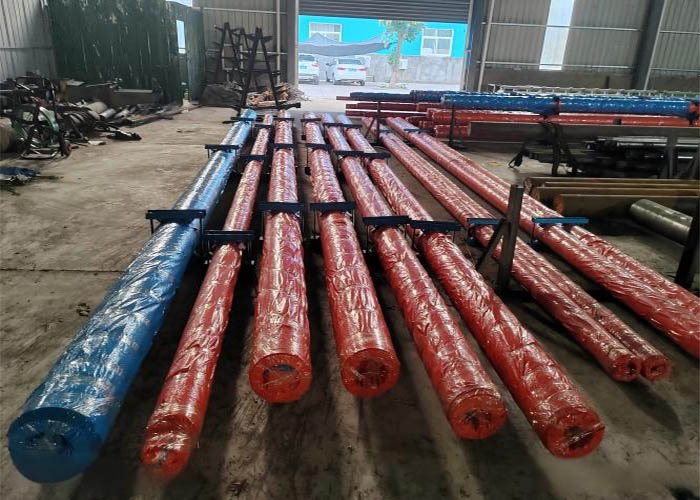
– Qualified forged bars are packaged and stored according to customer requirements.
V. As semi-finished products, what are the applications of 4145H forgings in the oil industry, or what products can they be used for?
4145H forgings, as semi-finished products, are widely used in the oil and gas industry, mainly including the following product categories:
- Drill Collars
The most core application of 4145H is the manufacture of drill collars, which are the lowermost components of the drill string and a major part of the Bottom Hole Assembly (BHA). Drill collars are mainly divided into three types:
Slick Drill Collars:Smooth thick-walled tubular structure with connecting threads machined on both ends.
Spiral Drill Collars: Three right-hand spiral grooves machined on the outer cylindrical surface to reduce contact area with the borehole wall, effectively preventing differential sticking.
Non-Magnetic Drill Collars:Manufactured from special materials for downhole monitoring during drilling.
- Heavy Weight Drill Pipe (HWDP)
4145H is also a common material for Heavy Weight Drill Pipe. HWDP is a medium-weight drilling tool with wall thickness greater than ordinary drill pipe but less than drill collars. It is placed between drill pipe and drill collars in the drill string assembly to prevent abrupt cross-section changes and reduce drill pipe fatigue.
- Downhole Drilling Tool Components
4145H is widely used in the manufacture of various downhole drilling tools, including:
– Tool joints
– Subs
– Crossovers / Adapters
– Fishing tools
– Stabilizers
- Other Downhole Tools
4145H can also be used to manufacture casing, drive shaft housings, and related components for positive displacement motors (PDMs).
VII. FAQ
1. Advantages of 4145H Forged Bar
– Combines high strength and high toughness;
– Excellent hardenability;
– Good corrosion resistance;
– Outstanding wear and impact resistance;
– Good processability;
– High-temperature stability.
2. Between 4140 forged bar and 4145H, which one is more suitable for drilling tools?
4145H is better suited for drilling tool applications. The primary reasons include the following:
Difference in Chemical Composition: 4145H contains more carbon (0.42%~0.49%) compared to 4140 (0.38%~0.43%), which translates to higher strength and hardness.
Hardenability Benefit: The hardenability of 4145H is higher and the material excels in large diameter hardening.
Strength Measure: The tensile strength as well as yield strength of 4145H exceed those of 4140, making 4145H a very suitable material for downhole tools like drill collars that require high pressure and high torque resistance.
The Role of Application: 4145H is the designated steel for drill collars, heavy weight drill pipe, etc. as per the industry norms while 4140 is mostly used for parts like tool joints which are the ones bearing light to medium loads.
In Summary:
If you are dealing with large-diameter drilling tools with high load requirements such as drill collars and heavy weight drill pipe, 4145H is the more suitable material. For components like ordinary tool joints, 4140 may also be used.
3. What are the delivery condition and length of your company’s 4145H forged bars?
Delivery Condition: 4145H forged bars are typically delivered in the following conditions:
– Annealed condition
– Quenched and tempered condition
– Specific delivery conditions can be customized according to customer requirements.
Surface finishing methods include: Cold drawing, peeling, rough turning, grinding, etc.
Delivery Lengths:
– Turned/Peeled round steel: Φ20~600 mm, length 1000~10000 mm
– Hot-rolled round steel: Φ20~200 mm, length 1000~10000 mm
– Cold-drawn round steel: Φ4~20 mm, length 1000~5000 mm
– Actual delivery dimensions can be produced to fixed or random lengths as per user requirements.
4. How to ensure the internal quality (inspection grade) of 4145H forged bars?
To ensure the internal quality of 4145H forged bars, the following multiple assurance measures are taken:
4.1 Cleanliness Control
Through the Electric Arc Furnace + Secondary Refining + Vacuum Degassing melting process, the cleanliness of the molten steel is strictly controlled, reducing inclusions and gas content.
4.2 Ultrasonic Testing (UT) Inspection
Ultrasonic testing is performed according to the following standards:
– GB/T4162 (Ultrasonic testing method for forged and rolled steel bars)
– GB/T6402 (Ultrasonic testing method for steel forgings)
– JB/T5000.15 (General technical conditions for heavy machinery – Non-destructive testing of steel forgings)
– Or other inspection standards required by the user, such as ASTM E 213
This ensures the forged bars are free from internal defects such as cracks, porosity, or segregation, meeting user requirements for internal quality (as specified by standards like API 7-1).
4.3 Process Monitoring
Full tracking and monitoring are implemented during key processes such as melting, forging, and heat treatment. Technical personnel strictly execute standardized operations to ensure process stability.
4.4 Sample Testing
For each batch, samples are taken from specified locations (surface / below 1 inch depth) for mechanical property tests including tensile, impact, and hardness to ensure performance indicators meet the standards.
- What are the equivalent grades of 4145H forged bar?
The correspondence between 4145H and related American AISI and domestic Chinese grades is as follows:
| Standard / Region | Equivalent / Corresponding Grade | Remarks |
| AISI / UNS | 4145H / UNS G41450 | Original standard grade |
| China GB (common substitute) | 42CrMo | Similar composition, but 4145H has slightly higher carbon content and superior properties |
| Germany DIN / EN | 1.7225 | European corresponding grade |
| German standard | 42CrMo4 | Similar composition, European standard grade |
| Similar Chinese grade | 45CrMnMo (theoretical value) | Not officially included, for reference only |



Reviews
There are no reviews yet.