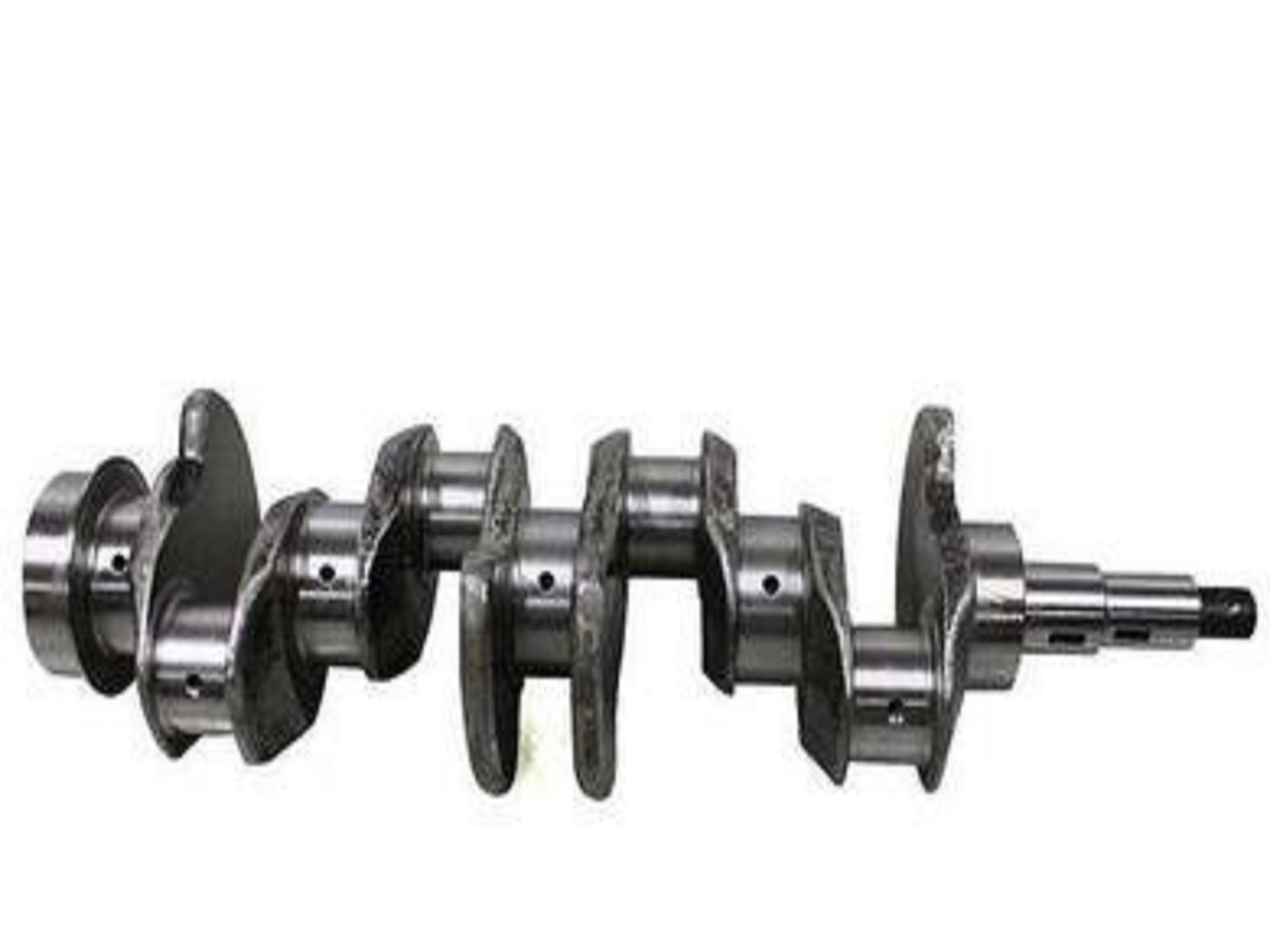
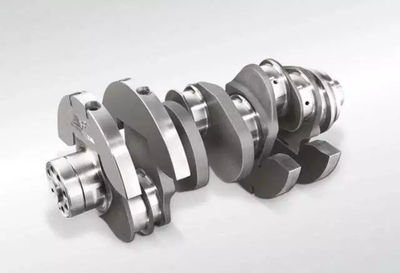
When it comes to engine durability, what is the first key factor that comes to mind? In my opinion ,forged crankshafts definately remain a key factor. The demand for reliable forged crankshafts continues to grow, whether in heavy-duty diesel engines, high-performance modified vehicles, or industrial equipment.
Based on our years of manufacturing experience, many buyers, when comparing cast and forged crankshafts, are no longer solely focused on price. In fact, they are more concerned with fatigue life, strength, and long-term performance. To grasp these distinctions, it is essential to understand the real forging process of forged crankshafts.
Manufacturing Process of Forged Crankshaft
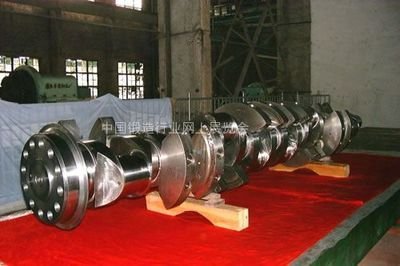
Each phase in the manufacturing of a forged crankshaft is rigorously controlled, from the initial melting of materials to the final precision machining. The condition of the steel at each step of the crankshaft forging process will determine its strength, durability, and performance over time.
1. Melting – Raw Material Preparation for Forged Crankshaft
These molten metal is the basis for producing high-strength forged steel crankshafts.
2. Steelmaking – Refining for forged Crankshaft
The typical steelmaking process consists of two steps. First, ladle refining, i.e., during steelmaking molten metal is not only purified but also alloying elements are added to get the best mechanical properties for forging the crankshaft. The second step is the casting of the refined steel into a mold to produce an ingot that is subsequently used for forging the solid steel blocks of the crankshaft parts.
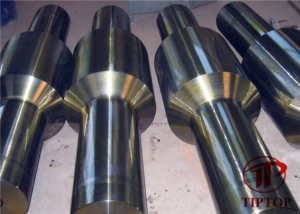
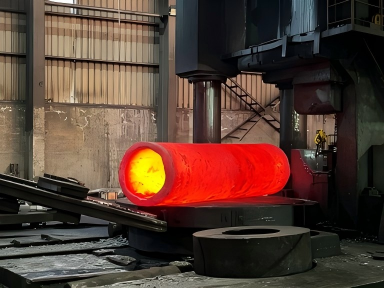
3. Forging – Core Stage of Crankshaft Forging
This is the key step in manufacturing a forged crankshaft.
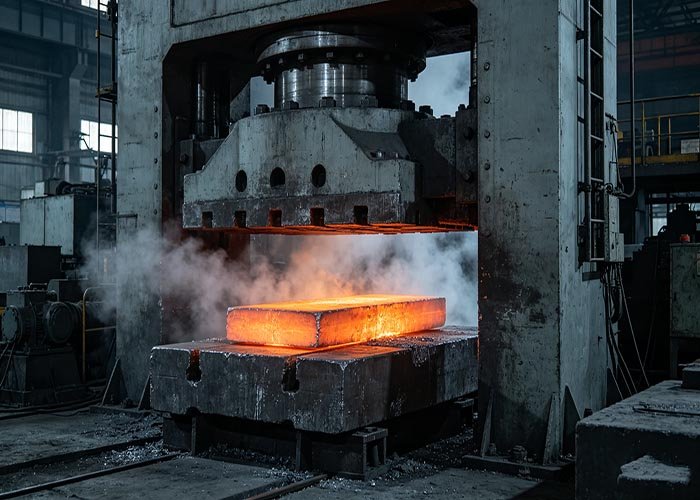
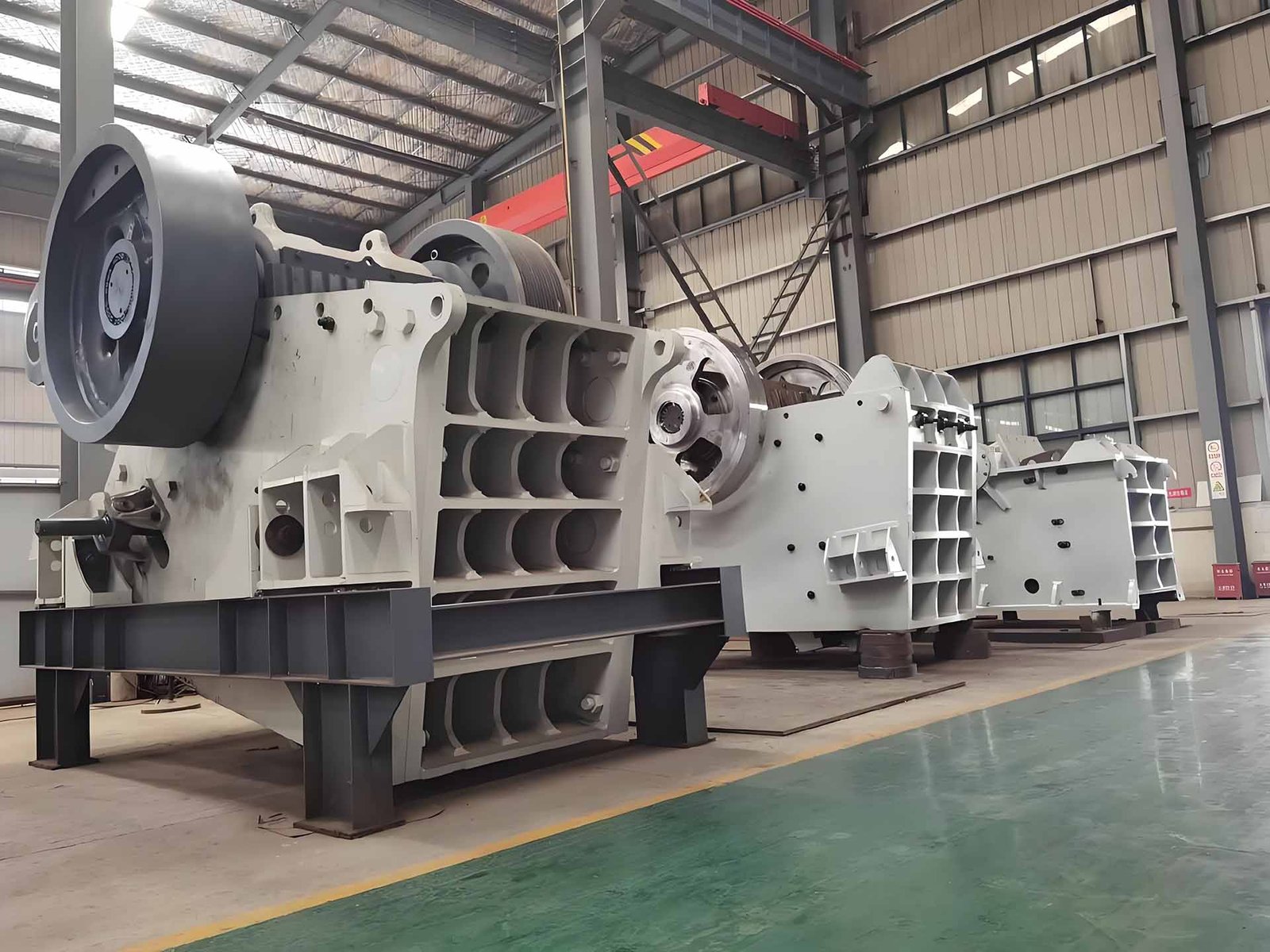
·Open-die forging is used for large crankshafts, where powerful presses gradually shape the steel.
·RR forging (solid crankshafts) involves localized heating of round bar stock, followed by controlled compression using specialized equipment. This method improves material flow and structural integrity.
Through this stage, the internal grain flow is aligned, which is the main advantage of forged vs cast crankshaft designs.
4. Heat Treatment – Enhancing Forged Steel Crankshaft Properties
After forging, the crankshaft forging is heat-treated by heating it to a specific temperature and then cooling it under controlled conditions.
By professional heat treatment, ensuring the required balance of hardness, toughness, and fatigue resistance
5. Individual Machining – Pre-Finishing of Forged Crankshaft Components
At this stage, individual components such as throws and journals are machined into near-final shapes.
The journal is intentionally left slightly oversized compared to the corresponding hole in the throw. This is necessary for the next step in the crankshaft forging assembly process.
6. Shrink Fitting – Assembly in Forging Crankshafts
The throw is heated to expand its internal diameter, allowing the journal to be inserted.
As the material cools, it contracts and forms a tight interference fit. This shrink fitting process ensures strong mechanical bonding, which is critical for high-load forged crankshaft applications.
7. Finish Machining –Precision Finishing of Forged Crankshaft
In the last phase, a highly accurate machining process is carried out on the forged crankshaft.
- ·Machining tolerance can be as low as 0.01 mm
- ·Hand-polishing of the final surfaces is done to achieve the highest level of smoothness
These processes guarantee that the crankshaft will function with a high level of smoothness inside the engine; this is one of the main reasons why it is commonly used in high-performance crankshaft forgings.
Forged vs Cast Crankshaft: Which One Should You Choose?
The debate around forged vs cast crankshaft comes down to application.
- ·Cast crankshafts are suitable for standard-duty use
- ·Forged crankshafts are preferred for high load, high stress, and long service life
For industries where failure is not an option, the choice is usually clear.
FAQ About Forged Crankshaft
1. What’s different about cast vs forged crankshaft?
At a very broad level, what distinguish cast vs forged crankshaft is the way the materail is formed and the difference in performance characteristics under load.
A cast crankshaft is manufactured by pouring molten metal into a mold, this method is a lot cheaper but it also leads to a less uniform internal structure.
Meanwhile, a forged crankshaft is made by subjecting a block of steel to extremely high pressures in the process of compression. The enhanced grain flow makes the crankshaft not only stronger but also more resistant to fatigue and more capable of withstanding highstress conditions.
When it comes to heavy-duty or long-life applications, a forged crankshaft is, in most cases, the right choice.
2. Is a forged crankshaft always better than a cast crankshaft?
When talking about forged vs cast crankshaft, “better” really depends on the use case.
- ·Cast crankshafts are good enough for regular engines that experience moderate loads
- ·Forged crankshafts are made for high-performance, heavy-duty, or long-lasting use
3. Why is the 4340 forged steel crankshaft so popular?
One of the reasons why the 4340 forged steel crankshaft is the go-to choice is that the material itself is a great compromise among strength, toughness, and fatigue resistance.
Being a 4340 alloy steel which comprises nickel, chromium, and molybdenum elements, it has outstanding hardenability and structural stability. This makes it fit for highly demanding environments such as:
- ·performance engines
- ·heavy-duty diesel applications
- ·industrial machinery