
Description
1. What is an Alloy 625 Square Flange Forging?
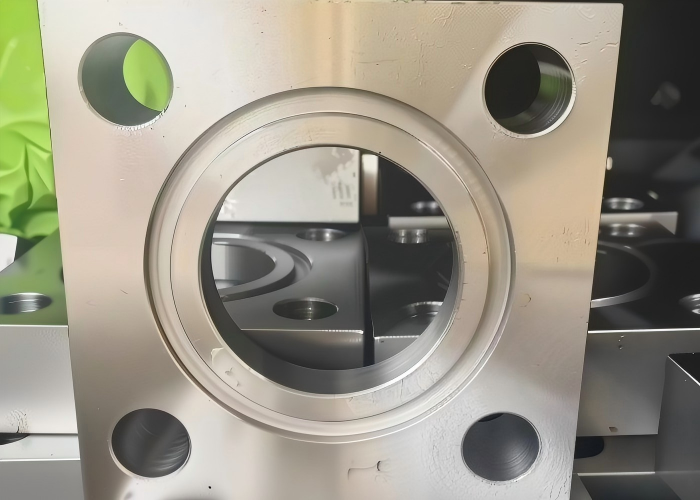
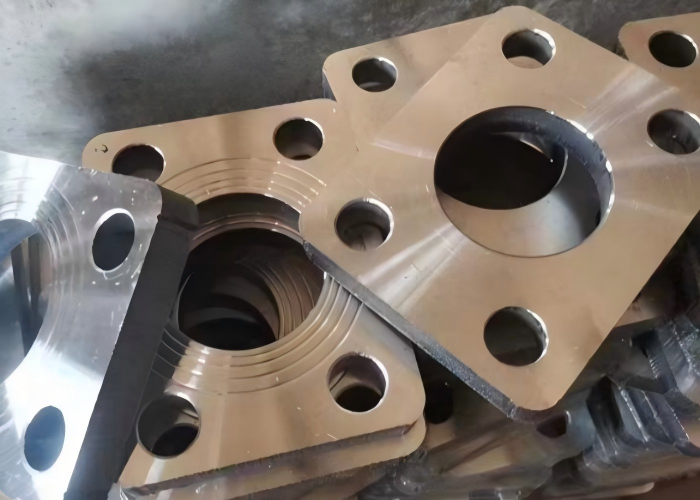
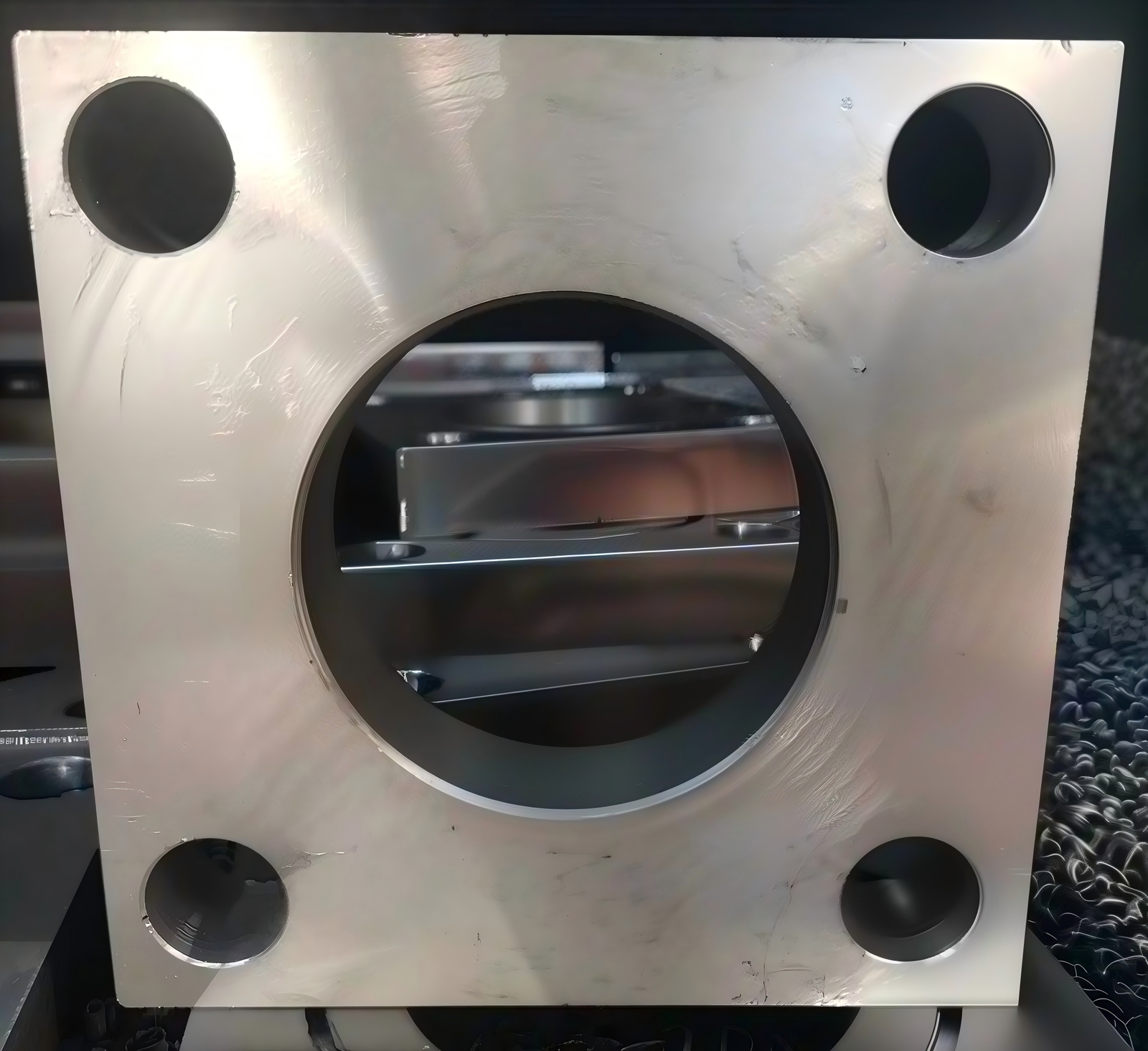
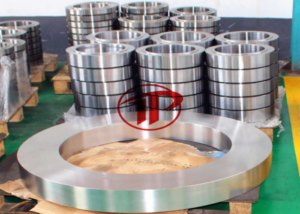
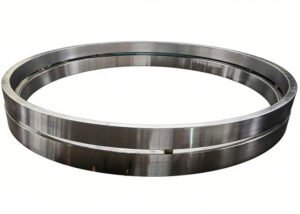
An Alloy 625 square flange forging is a flange connector with a square cross‑section, made from Alloy 625 (UNS N06625) through a forging process. The term “forging” indicates that the flange is shaped by forging rather than casting. Forging produces a denser internal structure, more favourable grain flow, and significantly better mechanical properties than casting. “Square” refers to the square shape of the flange cross‑section, as opposed to traditional round flanges. The primary standard governing Alloy 625 square flange forgings is ASTM B564 (Standard Specification for Nickel Alloy Forgings).
2. What are the key performance advantages of Alloy 625 square flange forgings?
2.1 Excellent corrosion resistance
Alloy 625 performs exceptionally well in a wide range of corrosive media:
- Resistance to chloride attack: outstanding resistance to pitting, crevice corrosion, and stress‑corrosion cracking in chloride‑containing environments (e.g., seawater, brine); virtually immune to marine corrosion.
- Resistance to inorganic acids: excellent resistance to sulphuric, hydrochloric, nitric, phosphoric acids and their mixtures.
- Resistance to sour gas: certified per NACE MR‑01‑75 for sour gas service, providing resistance to hydrogen sulphide stress‑corrosion cracking.
2.2 Excellent high‑temperature performance
- Melting range: 1290‑1350°C.
- Maintains high strength up to 982°C.
- Outstanding strength and toughness from cryogenic temperatures up to 1093°C.
- At 650°C, tensile strength remains above 550 MPa, and creep‑rupture strength is nearly twice that of conventional stainless steels.
2.3 Outstanding mechanical properties
- Room‑temperature tensile strength ≥ 760 MPa, yield strength ≥ 345 MPa, elongation ≥ 30%.
- Good fatigue strength and resistance to stress corrosion.
- Face‑centred cubic (FCC) crystal structure provides a combination of high strength and good ductility.
2.4 Good workability and weldability
- Good cold and hot formability.
- Excellent weldability; can be TIG welded under protective atmosphere, brazed, or resistance seam welded.
- No susceptibility to post‑weld cracking.
2.5 Additional benefits from the forging process
Compared to cast flanges, forged flanges offer superior mechanical properties, a denser structure, and fewer internal defects.
3. Applications of Alloy 625 square flange forgings
Alloy 625 square flange forgings are widely used in the following fields:
| Application Area | Specific Uses |
| Aerospace | Jet engine combustors, turbine discs, guide vanes, casings, fuel manifolds, etc. |
| Chemical & Petrochemical | Components in organic chemical processes containing chlorides, acidic chloride catalyst services, chemical equipment. |
| Marine Engineering | Applications in contact with seawater and subject to high mechanical stresses, subsea pipeline connections. |
| Energy & Power | Gas turbine combustors, transition ducts, guide vanes, turbine blades. |
| Pollution Control | Absorbers, reheaters, flue gas inlet dampers, agitators, baffles, and flue ducts in flue gas desulphurisation (FGD) systems. |
| Nuclear Power | Nuclear piping connections. |
| Pulp & Paper | Digesters and bleaching towers. |
4. What is the typical production process for Alloy 625 square flange forgings?
The typical production process comprises the following main steps:
4.1 Raw material preparation
Prepare the nickel‑base Alloy 625 alloying elements according to the specified composition.
4.2 Melting
Charge the weighed raw materials into a vacuum induction melting (VIM) furnace or electric arc furnace for melting at high temperature, allowing the materials to melt and homogenise, forming molten Alloy 625 metal.
4.3 Forging or extrusion
Cast the molten metal into ingots, then use large forging equipment for forging or extrusion. Through successive deformation and plastic working, the desired shape and dimensions are achieved.
4.4 Heat treatment
Heat‑treat the forging to relieve internal stresses and refine the microstructure and properties.
4.5 Machining
Perform turning, milling, drilling, grinding, and other machining operations on the heat‑treated forging to obtain the final flange geometry, ensuring dimensional and surface accuracy as required.
4.6 Inspection and quality control
Carry out various tests throughout production, including dimensional measurement, hardness testing, non‑destructive testing (ultrasonic, magnetic particle inspection), and chemical composition analysis.
4.7 Surface finishing
After machining, apply surface treatments such as polishing, shot blasting, and pickling to improve surface quality and appearance.
4.8 Packaging and delivery
After final inspection and surface treatment, pack the products – typically in wooden crates – mark them with relevant information, and deliver them according to the purchase order.
5. Our company’s advantages in producing 625 square flange forgings
5.1 Full in‑house production capability
We operate a complete production line covering vacuum refining, electro‑slag remelting, forging, machining, and heat treatment, enabling full quality control from raw material to finished product.
5.2 Extensive production experience
We have accumulated rich practical experience in forging flanges and other components from special materials such as nickel‑base alloys and corrosion‑resistant alloys, ensuring consistent and reliable product quality.
5.3 Flexible non‑standard customisation
We can produce flanges according to various international standards (ANSI, DIN, JIS, GB, etc.) or customise to customer drawings for non‑standard sizes and configurations.
5.4 Strict quality control
Equipped with comprehensive testing facilities, including chemical analysers, spectrometers, carbon‑sulphur analysers, ultrasonic testing equipment, and tensile testing machines, we ensure every product meets ASTM B564 and other applicable standards.
5.5 Fast delivery
With mature production lines and efficient production management, we are able to offer competitive lead times.
6. FAQ
6.1 What are the unique advantages of square flange forgings over traditional round flanges?
The main advantages of square flanges over round ones lie in space utilisation:
- Compact pipe arrangement: square flanges allow closer spacing of pipes, which is especially beneficial in equipment‑dense or space‑constrained installations.
- Convenient for side‑by‑side multiple pipes: when multiple pipes are laid in parallel, square flanges make more efficient use of planar space.
- Easier alignment: the flat surfaces of square flanges facilitate assembly and alignment with mating components.
6.2 Can your company supply non‑standard customised Alloy 625 square flange forgings?
Yes.
We support customisation of non‑standard Alloy 625 square flange forgings as follows:
- Manufactured to customer‑provided drawings.
- Compatible with multiple standards: ANSI, DIN, JIS, BS, GB, etc.
- Flexible dimensions and special shapes available.
- Material assurance: using high‑quality Alloy 625 raw material to ensure compliance and performance.
For non‑standard customisation, we recommend that you provide detailed drawings and technical requirements so that we can carry out precise process design and provide an accurate quotation.

Reviews
There are no reviews yet.