
Description
Mantle Forgings Product Overview
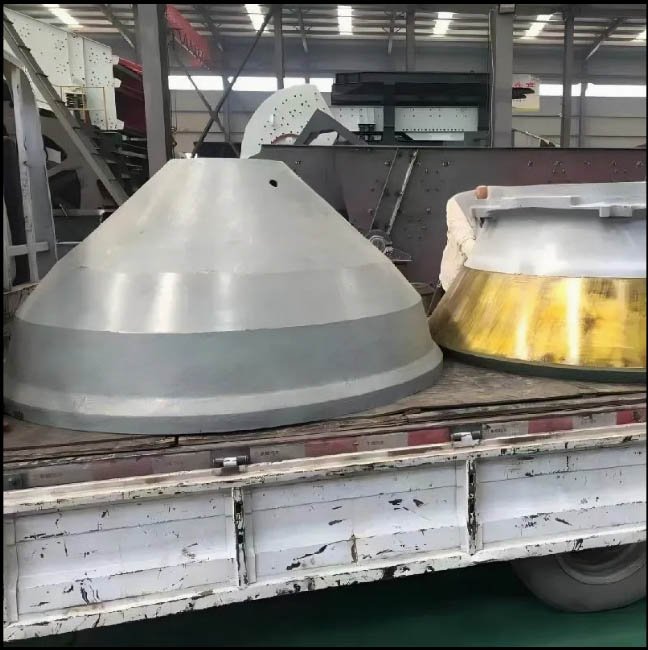
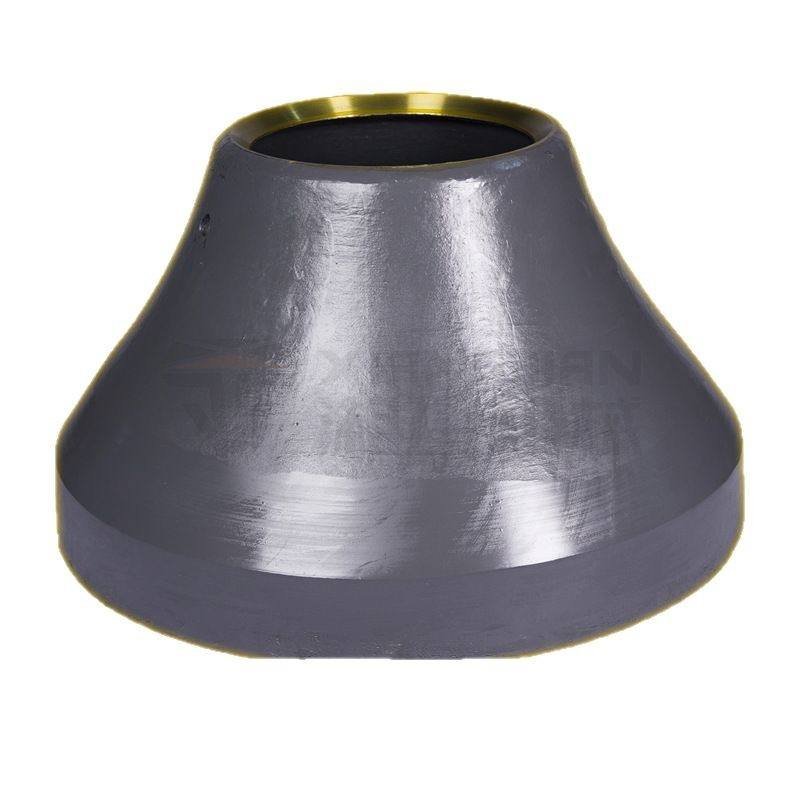
Mantle forgings are key wear parts used in crushing equipment, especially in cone crushers operating in mining and aggregate production lines. The mantle is installed on the moving cone and works together with the bowl liner to form the crushing chamber.
During operation, ore or rock enters the chamber and is gradually crushed as the mantle moves toward the liner surface. The material is compressed, bent and fractured until it reaches the required size before leaving the crusher.
Because this part is exposed to continuous impact and heavy compressive loads, the material and manufacturing process have a direct influence on service life and crushing efficiency.
TIPTOP Forging manufactures crusher mantle forgings designed for demanding working environments commonly found in mining and aggregate processing plants.
Types of Mantle Forgings
Different crusher configurations require different mantle profiles. In practice, mantle forgings are usually divided into several types depending on the crushing stage.
Standard Mantle for Secondary Crushing
Standard mantles are typically used during the secondary crushing stage. The mantle profile is designed with a moderate slope, allowing the crusher to process medium-sized feed materials.
This configuration is commonly used after primary crushing when the material has already been reduced but still requires further size reduction.
Short Head Mantle for Fine Crushing
Short head mantles are used in fine crushing or tertiary crushing applications. Compared with standard designs, the cone angle is steeper and the parallel zone is longer.
This geometry allows the crusher to produce finer product sizes and maintain better particle shape.
Certain crushing plants that are operating in special conditions such as sand production lines or ultrafine crushing processes may find that standard mantle designs are not suitable to provide the best performance.
TIPTOP can develop mantle forgings tailored specifically to equipment drawings, operating conditions, or even unique material features.
Size Range for Mantle Forgings
Crusher mantles differ very much not only with the type of the crushing equipment but also with the size. Besides that, both the standard and customized sizes can be manufactured.
Generally, the production capabilities include:
Outer diameter: in the range from 300 mm up to 3000 mm
Weight of a single piece: from roughly 50 kg to 5000 kg
Thickness of the wall: typically 25 mm or more, higher thicknesses are usually required to meet strength standards of certain crusher models
In case of replacement parts, the mantle may as well be fabricated following customer drawings in order to guarantee the compatibility with the existing crusher equipment.
What are the crusher mantle forgings used for?
Mantle forgings find application in many industries that require huge quantities of raw materials to be converted into smaller sizes.
For the mining segment, crusher mantles are the preferred solution for handling of materials such as iron ore, manganese ore, copper ore and other types of metal ores.
Aggregate production employs the same equipment for the purpose of limestone, granite, basalt and river stones crushing to make construction aggregates and manufactured sand.
Cement factories use crushing equipment for the preparation phase of their raw materials. On the other hand, metallurgical plants may have similar crushing systems in place for processing of slag or recycling material.
Manufacturing and Heat Treatment
Proper handling of material composition as well as manufacturing techniques is essential for the production of a robust crusher mantle.
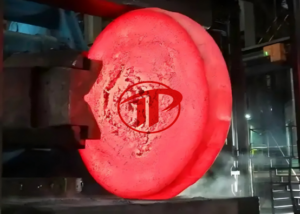
Most of the times, mantle forgings are made out of high-manganese steel or some other types of alloys that are highly wear-resistant. Also, forging is very effective in aligning the internal grain of the metal and therefore, enhances its strength.
Subsequently, the part is subjected to heat treatment operations like quenching, tempering or water toughening. The objective of these processes is to balance hardness and toughness levels in order to make the wear parts resistant to impacts.
Before the mantle is shipped, surface finishing and dimensional inspection are carried out.
Quality Control at TIPTOP Forging
Every mantle forging is thoroughly checked prior to shipment in order to verify the compliance with technical requirements.
Usually, quality control measures encompass the analysis of chemical composition, dimensional checks and visual surface inspections. These measures certify that both material and geometry are in accordance with the respective industry standards such as ASTM or GB.
Consistent quality maintenance is critical since unsuitable material composition or dimensional differences might lead to premature failure of crusher components.
Custom Mantle Forgings from TIPTOP
There is a great variety of designs and operational conditions for the crushing equipment that is normally used in mines and aggregate plants. Thus, replacement parts for wear are often required to be matching to specific equipment models.
TIPTOP Forging offers you the possibility of custom mantle forging based on your drawings or equipment specifications. Depending on the specific working conditions and types of materials being crushed, both the standard and reinforced designs can be generated.
This strategy gives operators the opportunity to choose mantle elements that are more aligned to their equipment and production needs.


Reviews
There are no reviews yet.