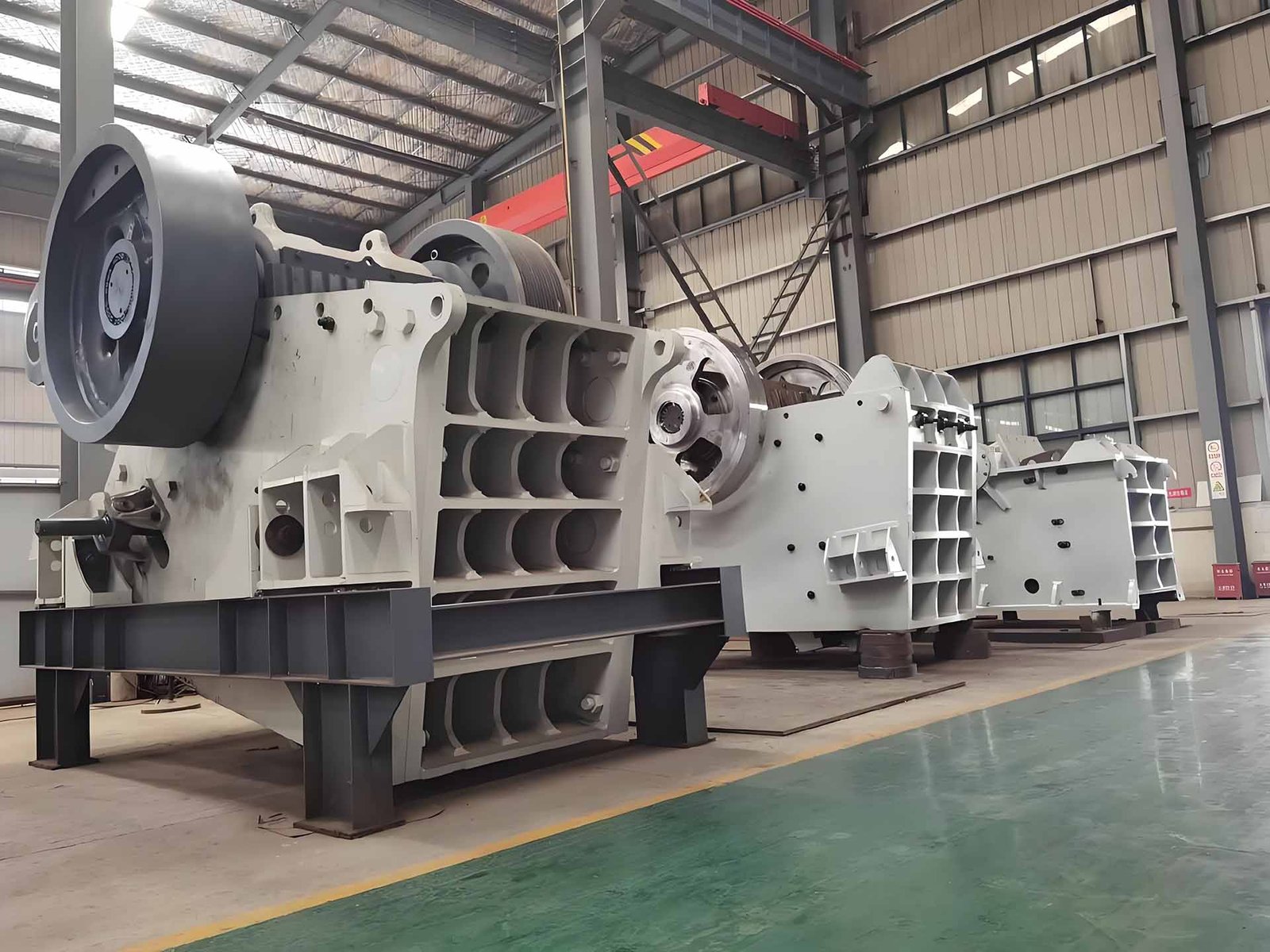
Titanium alloys have been gaining serious traction in aerospace, petrochemical, medical devices, and marine engineering over the past few years. High specific strength, excellent corrosion resistance, and good high-temperature performance – the material really delivers. But when it comes to actual production, many engineers and procurement professionals run into a practical question: which forging process route should I choose?
The forging temperature window for titanium alloys is notoriously narrow. Too low and you get cracking; too high and the microstructure coarsens. Pick the wrong route, and you either fail to meet quality requirements or lose control of costs. This article compares three mainstream processes – open-die forging, die forging, and isothermal forging – from the angles of process characteristics, applicable scenarios, and cost-effectiveness, in hopes of offering some practical reference for real-world decision-making.
1. What Are These Three Processes?
Before we talk about how to choose, it helps to get a clear picture of what each process actually involves.
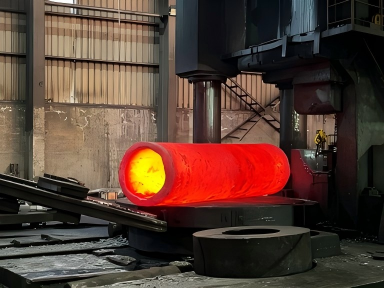
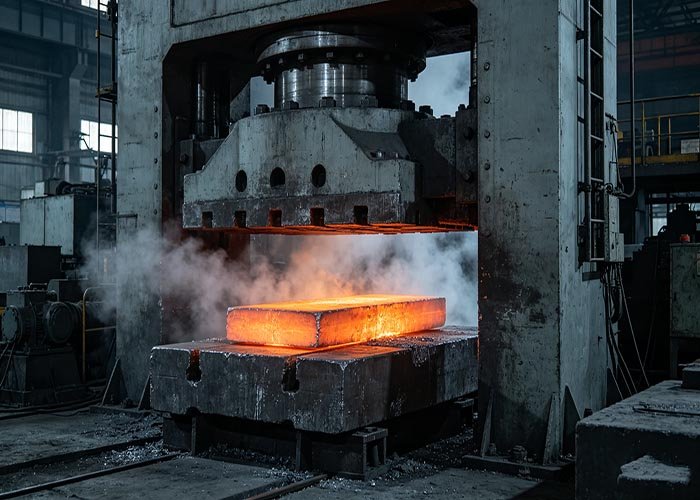
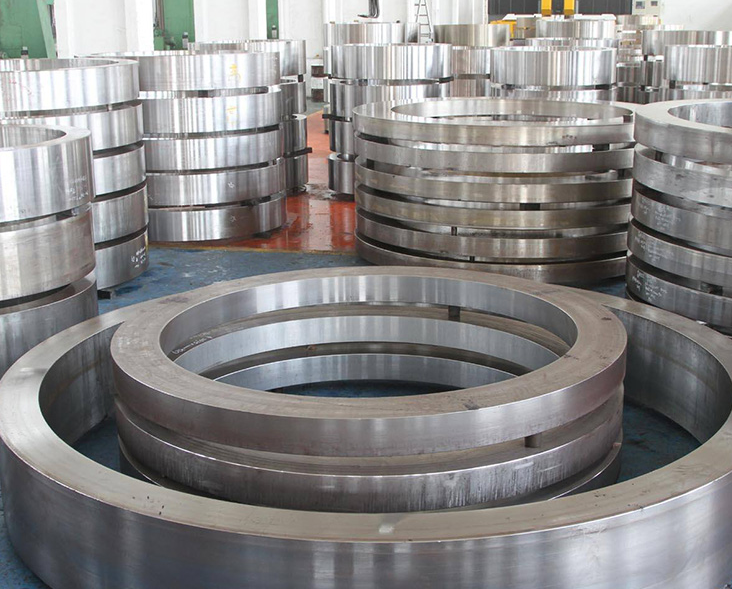
Open-die forging is essentially deforming a billet between two flat or shaped dies, with no die cavity to constrain the material. The final shape depends largely on the operator’s skill and experience. Temperatures typically run in the 850–950°C range, within the α+β two-phase field. Common equipment includes forging hammers, hydraulic presses, and high-speed forging units. Domestically, 100 MN four-column pull-down open-die forging presses are already in operation.
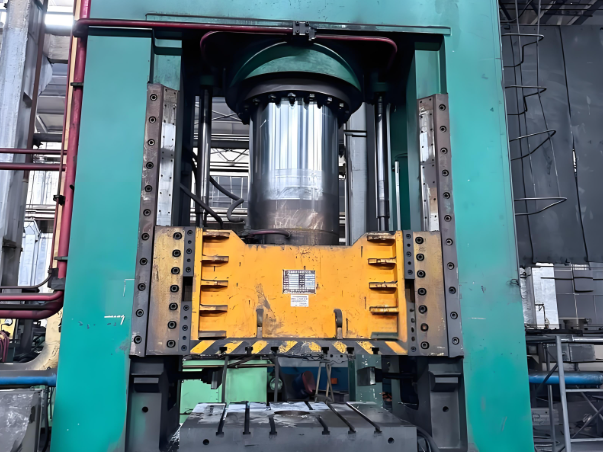
Die forging is different – the billet is placed into a pre-machined die cavity and shaped under pressure, giving much higher dimensional accuracy. Die forging comes in open-die (with flash) and closed-die (flashless) variants. The temperature range is similar to open-die forging, but equipment requirements are more demanding. Some domestic manufacturers now have 680 MN class die-forging press lines up and running.
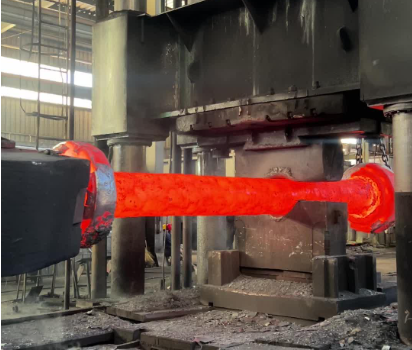
Isothermal forging is fundamentally different from the other two. The core idea is to heat the dies to the same temperature as the billet and keep that temperature constant throughout the forging process. This prevents surface cooling of the workpiece, drastically reduces deformation resistance, and allows large deformations with relatively low press forces. Temperatures are roughly 900–950°C, and deformation rates are typically kept around 0.1 mm/s. China has already issued a dedicated national standard, GB/T 38964-2020, to regulate isothermal forging processes.
2. A Side-by-Side Comparison – The Picture Gets Clearer
Let’s start with dimensional accuracy. Open-die forging gives the lowest accuracy, with large machining allowances – you end up cutting away a lot of material afterwards. Die forging is much better in terms of dimensional control. Isothermal forging offers the highest accuracy, capable of near-net shaping – for some complex parts, the forged shape is essentially the final product.
Surface quality follows a similar pattern: open-die forging leaves a rough surface, while die forging and isothermal forging are progressively better.
Production efficiency is lowest for open-die forging – you work piece by piece, and labor intensity is high. Die forging is the most efficient, well-suited for high-volume production lines. Isothermal forging falls in between, due to complex equipment and slower deformation rates.
Now look at investment cost. Open-die forging requires simple equipment and the lowest upfront investment. Die forging needs dedicated dies, which are expensive. Isothermal forging requires not only dies but also an entire die-heating system – equipment complexity and maintenance costs are at the highest level.
Material utilization is an interesting metric. Open-die forging leaves large allowances and wastes a lot of material. Die forging does better. Isothermal forging achieves the highest material utilization, saving 30–40% of the material. Given that titanium alloy itself is pricey, this adds up to a significant advantage in material cost for isothermal forging.
Microstructural uniformity is generally mediocre in open-die forging, better in die forging, and best in isothermal forging – because the temperature field is stable and deformation is uniform, giving the most consistent microstructure.
Finally, batch size suitability. Open-die forging is ideal for single pieces or small batches – no dies required, high flexibility. Die forging relies on high volumes to amortize die costs – large batches are where it shines. Isothermal forging suits medium batches of high-value-added components.
There’s one more detail worth mentioning about temperature control. Titanium alloy forging temperatures must be referenced to the beta transus temperature (Tβ). Open-die forging is usually carried out 20–50°C below Tβ (in the α+β region), producing a duplex or equiaxed microstructure. You can also do β-forging above Tβ to get a basket-weave structure. The tricky part is that titanium alloys have poor thermal conductivity, so local overheating is common during open-die forging – temperature differences between surface and core can lead to non-uniform microstructures. Die forging, with the constraint of the die cavity, gives more uniform deformation. Some comparative studies have shown that forging at Tβ (rather than Tβ+15°C) actually yields better overall mechanical properties. Isothermal forging is a different league – the dies and billet stay at the same temperature, deformation resistance is low, and microstructural uniformity is excellent. For TC18 titanium alloy, for example, 840°C at 0.1 mm/s deformation rate gives very good results.
3. So How Do You Choose? A Scenario-Based Guide
When Should You Prioritize Open-Die Forging?
The best applications for open-die forging start with ingot breakdown. Titanium alloy ingots coming out of the vacuum arc remelting furnace need to go through open-die breakdown to obtain a relatively uniform billet structure. Next are simple-shaped forgings – bars, discs, rings, and the like – where there’s no need to cut a die. Then there’s small-batch production – if you’re only making a few pieces, the cost of a dedicated die can’t be amortized, so open-die forging is more economical. Also, preforming for large forgings – you first break down a large ingot into a suitable billet size, then move to die forging.
On the flip side, if you have tight requirements for dimensional accuracy and surface finish, large batch sizes, or complex shapes, open-die forging isn’t the right fit.
There are plenty of real-world examples of combined approaches. For instance, a TC4 titanium alloy forging for an aircraft engine pylon – weighing 142 kg and 1.7 meters long – was made by first open-die preforming, then finish-formed in a blocker die.
When Does Die Forging Have the Edge?
Die forging is the go-to for complex-shaped parts – turbine blades, compressor discs, flanges, and so on. High-volume production is die forging’s absolute home turf; die costs become negligible when spread over thousands of parts. It’s also suitable for parts with high dimensional accuracy and surface quality requirements. For highly standardized components, dies can be reused many times, making them more cost-effective with each run.
Die forging isn’t suitable when you’re in small-batch pilot production, dealing with extra-large parts (press capacity may be insufficient), or when the shape is so simple that a die is overkill.
Domestic die-forging technology has come a long way in recent years – ultra-large titanium alloy monolithic frames with a projected area of nearly 2 m² have been successfully produced.
When Is Isothermal Forging the Better Choice?
Isothermal forging has a high barrier to entry and significant investment, but in some scenarios it’s irreplaceable. High-precision, high-performance parts – critical aero-engine components – often call for isothermal forging. Hard-to-deform titanium alloys – those with high-melting-point alloying additions that make conventional forging extremely difficult – can be tamed by isothermal forging. Complex thin-walled parts – like aircraft bulkheads with narrow ribs and thin webs – can be shaped in one go. And expensive materials – saving 30–40% of the material translates into massive cost savings.
When not to use isothermal forging? If the shape is too simple, if the budget is tight, or if the part is extremely large, isothermal forging may be overkill.
In practice, TC17 titanium alloy integrally bladed discs produced by beta isothermal forging have been used in several domestic fan and compressor models. Ti6242 titanium alloy casings, previously made by welding four separate pieces, are now forged as a single piece using isothermal forging – and the overall cost actually came down.
Combining Processes Often Works Best
These three processes aren’t mutually exclusive. In real production, hybrid routes often deliver the best results.
Open-die preforming + die finishing is the most common combination. You first break down the ingot into a suitable billet via open-die forging, then finish-form it in a die – getting the flexibility of open-die work and the precision of die forging.
Open-die preforming + isothermal die forging + finish forging is for even more demanding components. Take a TC4 titanium alloy aerospace forging as an example: start with open-die preforming, then isothermal die forging, and finally a finish-forging pass – the resulting microstructure and mechanical properties are excellent.
4. Decision-Making Reference
At the end of the day, choosing a process is about finding the balance among quality, cost, and batch size.
- For shape complexity: simple → open-die; complex → die forging; very complex or thin-walled → isothermal.
- For batch size: single/small → open-die; large → die forging; medium/high-value → isothermal.
- For precision requirement: low → open-die; high → die forging; extremely high → isothermal.
- For material value: ordinary titanium alloys in large batches can go with die forging; expensive or low-volume materials may justify isothermal.
- For performance requirements and budget: general performance with tight budget → open-die; higher performance with moderate budget → die forging; top performance with adequate budget → isothermal.
Practical Tips
Get communication right upfront. At the project definition stage, sit down with your forging supplier and go over the part shape, dimensions, performance requirements, and expected batch quantity. Work out the process route together. Don’t wait until the project is locked in – changing processes later comes at a heavy cost.
Don’t underestimate the preforming step. Regardless of whether you end up with die forging or isothermal forging, the quality of the open-die preform directly determines the success of every subsequent step. If the billet’s microstructure isn’t uniform, you’ll fail ultrasonic inspection and miss mechanical property targets – all your earlier work goes to waste.
Look at total lifecycle cost. Isothermal forging equipment and dies are undeniably expensive, but material utilization is higher and subsequent machining is reduced. For a precious metal like titanium, the material saved can offset the higher equipment and die costs. Some projects that look expensive on an isothermal quote actually turn out cheaper when you run the full cost calculation.
Know your industry standards. GB/T 16598-2013 Titanium and Titanium Alloy Forgings and GB/T 38964-2020 Process Specification for Isothermal Forging of Titanium Alloys – these are essential documents for anyone in this field. Procurement and technical staff should understand their basic requirements.
Finding a reliable supplier matters more than anything. Titanium alloy forging is technically demanding. A supplier that can handle the entire chain – melting, forging, heat treatment, machining, and inspection – saves you a lot of headaches. If something goes wrong, you don’t have to chase multiple vendors to find the root cause. One company takes full responsibility, accountability is clear, and communication is efficient.