
Description
1. Introduction to Non-Magnetic Stabilizer
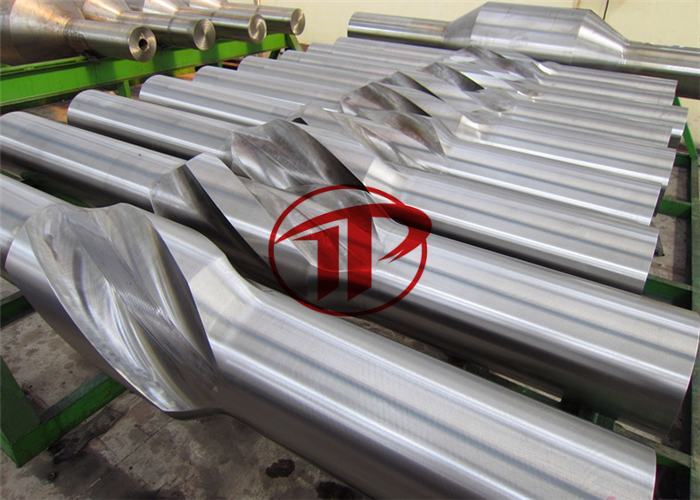
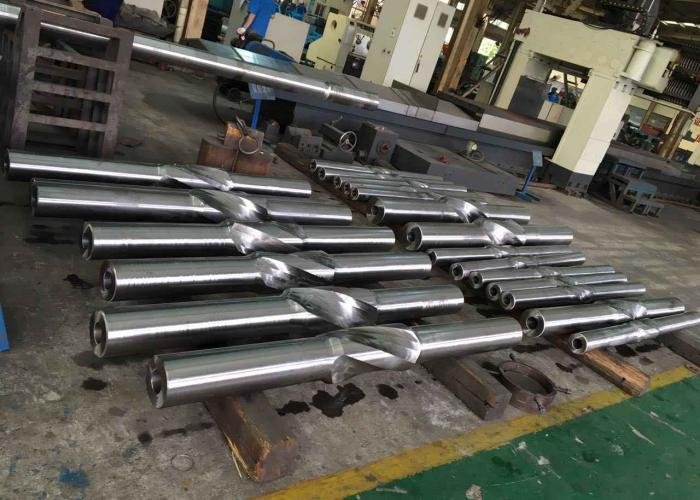
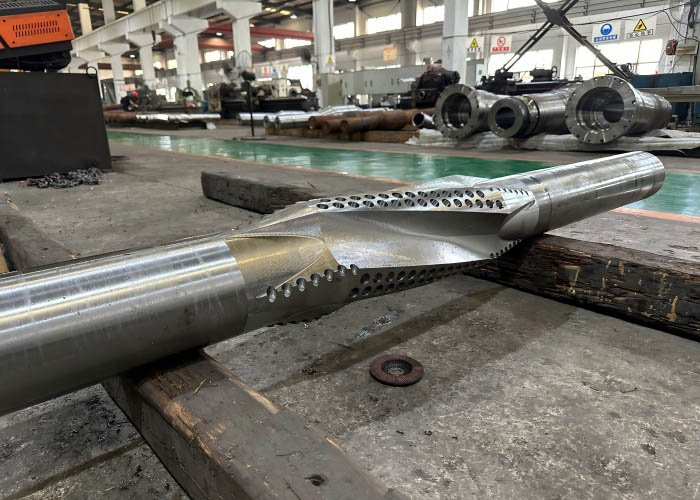
Non-magnetic stabilizers (also known as non-magnetic centralizers) are downhole tools used in conjunction with Logging-While-Drilling (LWD) systems in petroleum and geological drilling. Constructed entirely from low-permeability, non-magnetic alloys and installed on the exterior of non-magnetic drill collars, they serve to support and center the non-magnetic drill collar and LWD instruments within the wellbore, ensuring that logging sensors remain positioned at the center of the borehole.
During drilling operations, centering the instruments reduces friction against the borehole wall and minimizes vibration. It prevents magnetic steel from interfering with LWD and directional survey data, thereby ensuring the accurate acquisition of signals such as directional, gamma-ray, and resistivity logs. Additionally, they stabilize the bottom-hole assembly (BHA), control well deviation, and reduce eccentric wear on the drill string. They are widely used in directional, horizontal, and extended-reach drilling operations.
2. Common Sizes of Non Magnetic Stabilizers
Centralizing diameter: Φ120 mm – Φ450 mm
Note: The maximum outer diameter is customized based on the borehole size; non-standard sizes can be manufactured according to API standards.
3. Types of Non-Magnetic Stabilizers
- Integral non-magnetic stabilizer: Forged as a single, solid piece with the non-magnetic drill collar.
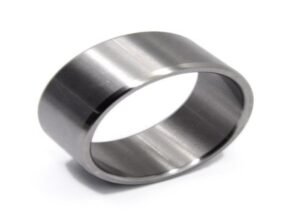
- Sleeve-type (assembled) non-magnetic stabilizer: A separate component fitted onto the non-magnetic drill collar; easy to install, remove, and replace; the most widely used type.
4. Common Materials of Non-Magnetic Stabilizers
Key requirements: Relative magnetic permeability (μr) ≤ 1.01; low magnetic permeability, high strength, and resistance to hydrogen sulfide and chloride ion corrosion.
Common materials: P530, P550, P650.
5. Applications of Non-Magnetic Stabilizers
- Petroleum drilling LWD/MWD: The primary application; ensures centering of directional, gamma-ray, and resistivity instruments, eliminates magnetic interference from the drill string, and guarantees data accuracy.
- Directional, horizontal, and extended-reach wells: Stabilizes the drill string, controls well deviation, reduces eccentric wear, and inhibits the accumulation of cuttings beds. Geological exploration, and coalbed methane (CBM) and shale gas drilling: Directional drilling for unconventional oil and gas resources such as coal seams and shale formations.
- Slim-hole drilling: Measurement-While-Drilling (MWD) operations for small-diameter wellbores.
- Geothermal, deep, and high-temperature wells: Compatible with high-temperature, non-magnetic bottom-hole assemblies (BHAs) to meet high-temperature logging requirements.
6. Advantages of our Non-Magnetic Stabilizers
- Controlled raw materials: We use an 8-ton induction furnace for melting and composition adjustment. After passing spectrometer testing, the melt is transferred to an 8-ton AOD refining furnace to enhance steel composition and purity. It is then cast into electrode billets. Magnetic permeability and metallographic structures undergo random sampling to ensure low magnetic properties at the source; magnetic permeability remains stably ≤1.01, with no issues regarding localized magnetism.
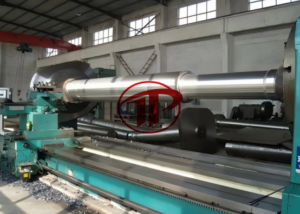
- Mature forging process: Formed via integral forging, resulting in a dense internal microstructure. Subjected to 100% ultrasonic testing (UT) to ensure freedom from internal cracks, porosity, or inclusions, offering excellent impact and fatigue resistance.
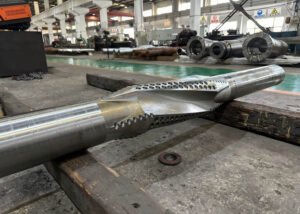
- Wear-resistant reinforcement: Hardfacing with carbide on the stabilizer blade surfaces provides resistance to wear and erosion, extending downhole service life and reducing the frequency of replacements during tripping operations.
- High dimensional accuracy: Strict adherence to API standards; precision machining of inner/outer diameters and blade geometric tolerances.
- Comprehensive documentation and testing: Each batch comes with material certification, magnetic permeability test reports, and flaw detection reports. Third-party re-inspection is supported to meet the requirements of both domestic and export projects.
7. FAQ About Non-Magnetic Stabilizers
7.1 What types of hardbanding do you offer?
- For non-magnetic stabilizers: HF3000, HF6000
- For standard stabilizers: HF1000–HF6000
7.2 What is the quality control system for non-magnetic stabilizer forgings?
7.2.1 Raw Material Quality Control
Sampling and re-inspection
Spectroscopic analysis
Magnetic permeability spot checks
Non-destructive testing (NDT) of raw materials
Segregation and handling of non-conforming materials: Non-conforming materials are isolated, marked, and returned; use in production is strictly prohibited. Materials are stored in designated zones to prevent mixing with carbon steel (which would introduce magnetic properties).
7.2.2 Forging Process Quality Control
- Forging process qualification: Validation of the forging process prior to production (forging ratio, initial/final forging temperatures, and forging passes) to ensure an adequate forging ratio, break down coarse as-cast grains, and eliminate porosity and shrinkage cavities.
- Heating control: Monitoring and recording of heating temperatures and holding times to prevent overheating or burning; strict avoidance of improper high temperatures that could cause ferrite precipitation in non-magnetic austenitic steel (which directly leads to excessive magnetic permeability).
- In-process inspection: Quality inspectors monitor the forging and mold-filling process on-site and record parameters for each heat; preliminary visual inspection to identify surface cracks, folds, laps, or material deficiencies, with immediate marking for rework or scrapping.
- Forging cooling control: Controlled slow cooling in accordance with the process specification to prevent cracking caused by residual forging stresses and to control microstructural transformation.
7.2.3 Semi-finished Forging Inspection (Prior to Machining)
Preliminary visual and dimensional inspection
Non-Destructive Testing (NDT)
Ultrasonic Testing (UT): Detection of internal shrinkage cavities, gas porosity, inclusions, laminar cracks, and white spots, in accordance with API standards. 7-1 Acceptance Levels
7.2.4 Machining Process Quality Control (Forging Machining Stage)
- First-article inspection
- In-process inspection
- Final inspection
7.2.5 Finished Product Re-inspection, Identification, Documentation, and Release
- Finished product re-inspection: UT and PT re-testing of finished products as required; re-testing of magnetic permeability
- Permanent forging identification: Heat number, individual serial number, and material grade stamped in non-load-bearing areas to ensure legibility after machining
- Non-conforming product control
7.2.6 Continuous Quality Control and Traceability System
- Batch traceability: “One piece, one ID” system
- Periodic process review: Collection of downhole performance feedback and third-party re-inspection results to continuously optimize the forging process
- Customer witnessing and third-party inspection: Facilitation of on-site supervision, witness sampling, and witnessing of flaw detection by third parties such as SGS and BV


Reviews
There are no reviews yet.