
Description
Introduction
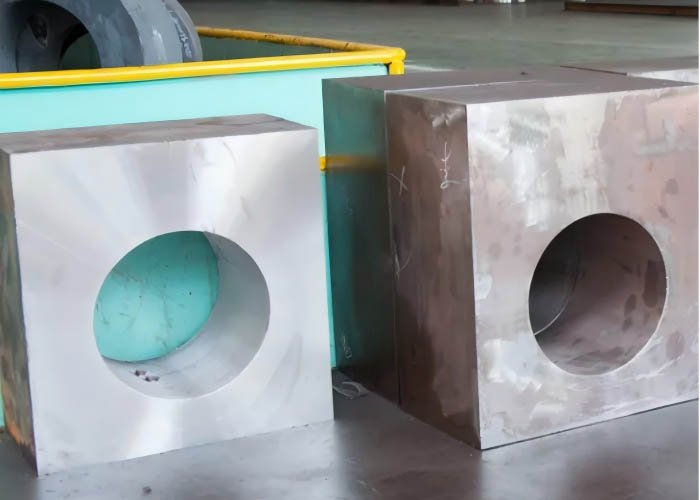
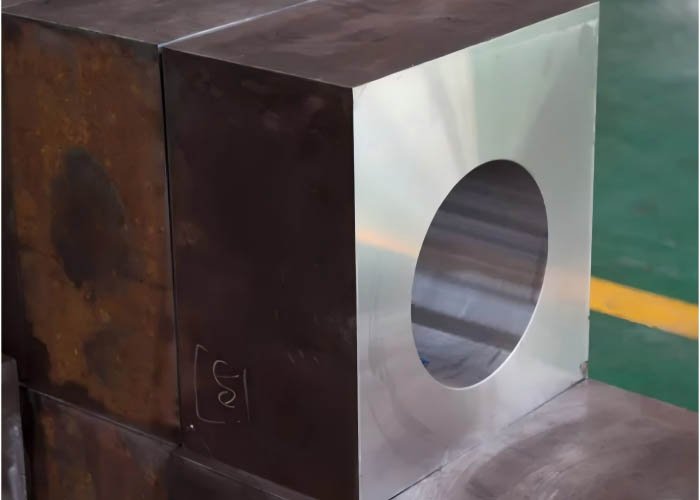
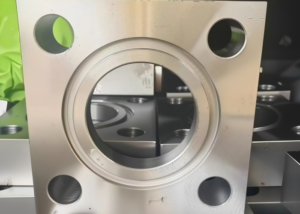
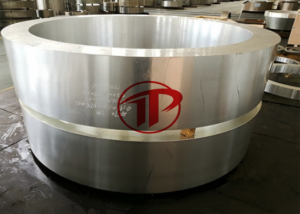
Forged carbon steel cylinder blocks are essential for high-pressure and continuous reciprocating motion systems. These blocks act as the main structure of hydraulic and pneumatic cylinders and have a direct impact on sealing performance, load capacity, and service life.
At TIPTOP, we produce forged cylinder blocks from quality carbon steel by tightly controlling the forging process. When compared to cast cylinder bodies, forged parts feature a denser internal structure, enhanced mechanical strength, as well as much better resistance to fatigue and failure due to pressure.
Why Choose Forged Cylinder Blocks Instead of Castings
Internal defects like porosity and shrinkage cavities may cause leakage, deformation, or premature failure in high-pressure applications.
Forging completely removes such by refining the grain structure by high-temperature deformation. As a result, the density as well as the uniformity of the material are improved.
When it comes to hydraulic cylinder blocks where the ability to maintain a good seal and withstand pressure are very important, the use of forged carbon steel offers a much more dependable alternative to casting materials. It also has a greater resistance to impact, which is why it can be used for heavy-duty and dynamic working conditions.
Material Selection for Carbon Steel Cylinder Blocks
The selection of materials is an important factor in influencing the operational performance of a cylinder block.
TIPTOP’s carbon steel material selection includes several internationally recognized grades to suit different customer needs. A105 is the common material used for forging that provides not only better weldability but also a good balance of strength and other properties. Medium carbon steels such as C45 or 1045 are superior in terms of mechanical performance and can be heat treated to obtain greater hardness and wear resistance.
Grades like S20C or S35C are quite a good match for the carburizing process when surface hardening or wear resistance is desired. Structural steels such as Q235B or Q345B are economical choices that are often used for applications under lower pressure conditions.
We make sure that the material chosen is capable of delivering both the performance and cost aspects that suit our customers’ requirements.
Structural Types and Customization Capability
Forged cylinder blocks may be fabricated with different structural layouts in accordance with application requirements.
Typical design types are through-hole and blind-hole cylinder blocks, flange-mounted structures, as well as trunnion or bracket-mounted types. Multi-stage cylinder blocks can be provided for complex hydraulic systems.
TIPTOP supports customer-driven customization by providing minimum lead-time and improved assembly compatibility. Customer drawings specifying overall dimensions, internal bore requirements, and connection interfaces are acceptable.
Manufacturing Process: From Forging to Final Machining
Production of top-quality forged cylinder blocks requires rigorous process control factors.
Production starts with the selection of carbon steel billets of superior quality and proceeds with controlled forging with the use of hydraulic presses or forging hammers. Such a method serves to improve internal structure and remove defects.
With heat treatment, desired mechanical properties such as strength, hardness, and toughness can be obtained. Following forging, rough and precision machining are performed to guarantee dimensional accuracy, particularly for the areas of internal bores and sealing surfaces.
Depending on working conditions, different anti-rust oiling, phosphating, or coating surface treatment options are available at the customer’s request.
Typical Applications of Forged Cylinder Blocks
Due to their strength and durability, forged carbon steel cylinder blocks are widely used across multiple industries.
In hydraulic systems, they are used in construction machinery such as excavators, loaders, and hydraulic presses, where high pressure and heavy loads are common.
In pneumatic systems, they are applied in industrial automation equipment and valve actuators requiring reliable motion control.
They are also used in marine power systems, including steering gear and deck machinery, as well as in mining and oilfield equipment such as drilling rigs and BOP systems. In transportation, they are commonly found in lifting and suspension systems of heavy-duty trucks.
Quality Assurance and Inspection
Quality control is especially important for components that are critical to the operation of a system such as cylinder blocks.
At TIPTOP, we implement ultrasonic testing on every single forged cylinder block to identify any internal defects and ensure they are structurally sound. Depending on client requirements, we also offer mechanical property testing like tensile strength, hardness, and impact resistance.
We ensure that every product can be fully traced back with material certificates being issued in accordance with EN 10204 standards.
Why Choose TIPTOP Forged Cylinder Blocks?
TIPTOP merges state-of-the-art forging machinery, rigorous process oversight, and a wealth of experience in the production of carbon steel forgings.
We guarantee stable quality of goods, customization adaptability along with dependable delivery timings. Besides optimizing the choice of material and production processes, we firstly assist clients in minimizing machining-related expenses and then improving the overall reliability of their equipment.
Request a Custom Cylinder Block Solution
If you are looking for forged carbon steel cylinder blocks for hydraulic or industrial use, our engineering department is at your disposal to help with material selection and design enhancement.
Feel free to upload your drawings or specifications, and we will send you a customized proposal and price estimate.

Reviews
There are no reviews yet.